디지털 아카이브의 프랑켄슈타인Frankensteining the Digital Archive
1759년 대영박물관(British Museum)이 세계 최초의 공공 박물관으로 개방된 이래, 오늘날의 박물관과 미술관은 그 어느 때보다도 예술과 지식의 접근성을 향상하는 것에 초점을 맞추고 있다. 이 화두는 디지털 환경으로 확장되어, 유수의 미술관과 박물관에서 누구나 소장품에 접근할 수 있도록 작품의 디지털 데이터를 제공한다.①❶2022년 체코 프라하에서 열린 ICOM(International Council of Museums, 국제박물관협의회)의 세계박물관대회에서의 ‘박물관’ 정의에 따르면, 박물관은 모든 이들에게 열린 포용적 기관을 목표한다. 이러한 맥락에서 디지털 기술은 박물관의 접근성을 확장하기 위한 중요한 수단이다.: “박물관 정의”, ICOM Korea, https://icomkorea.org/icom-info/.; “Missions and objectives”, ICOM, https://icom.museum/en/about-us/missions-and-objectives/. 뉴욕 메트로폴리탄 미술관(The Met)은 49만 점 이상의 유물 정보를 웹사이트를 통해 오픈 액세스(open access) 형식으로 제공하며, 대영박물관 역시 200만 건 이상의 소장품 중 상당수를 온라인에서 검색할 수 있도록 공개하였다. 이처럼 박물관의 실물 컬렉션은 정밀한 고화질 이미지로 디지털화되어, 새로운 창작의 재료로서의 가능성을 얻는다.
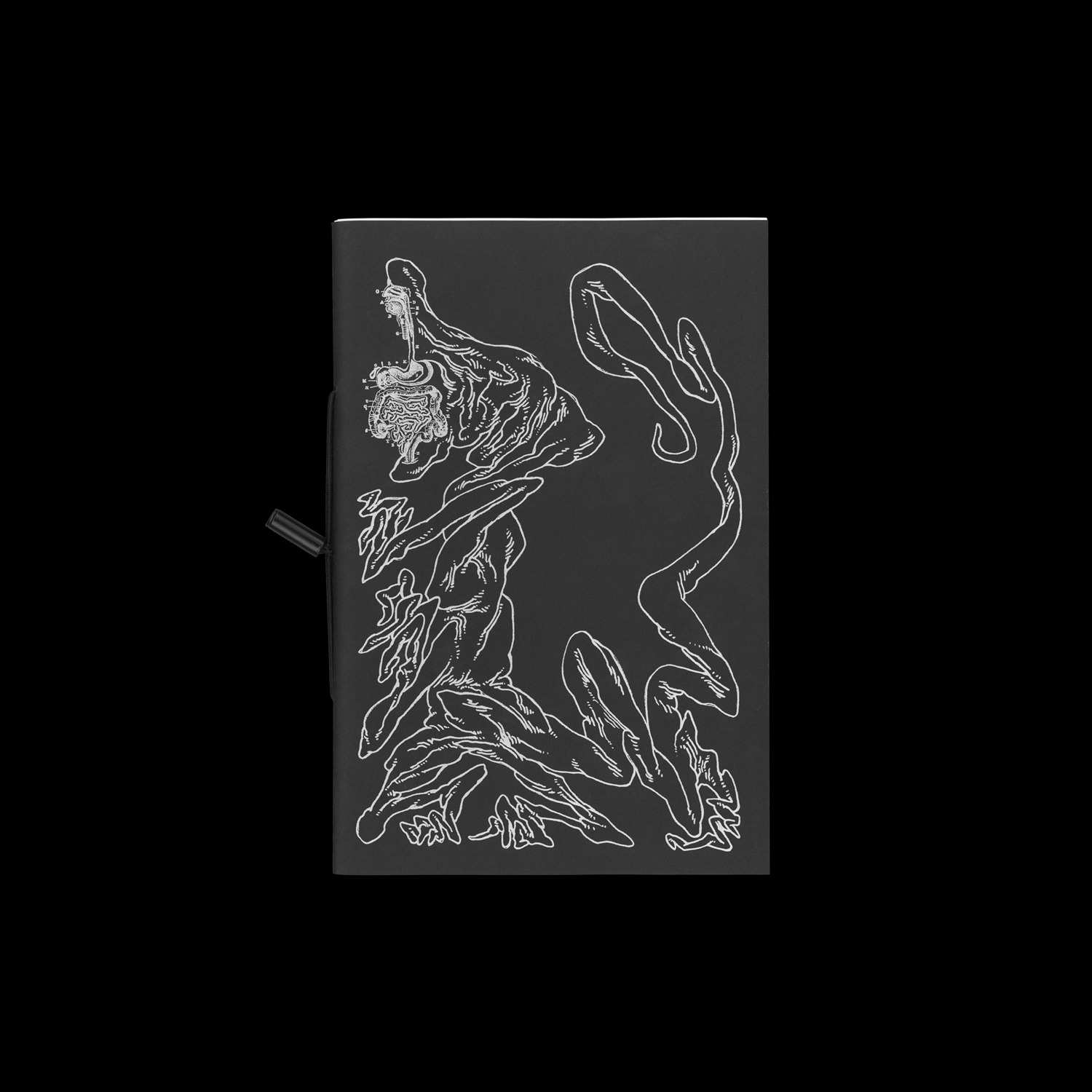
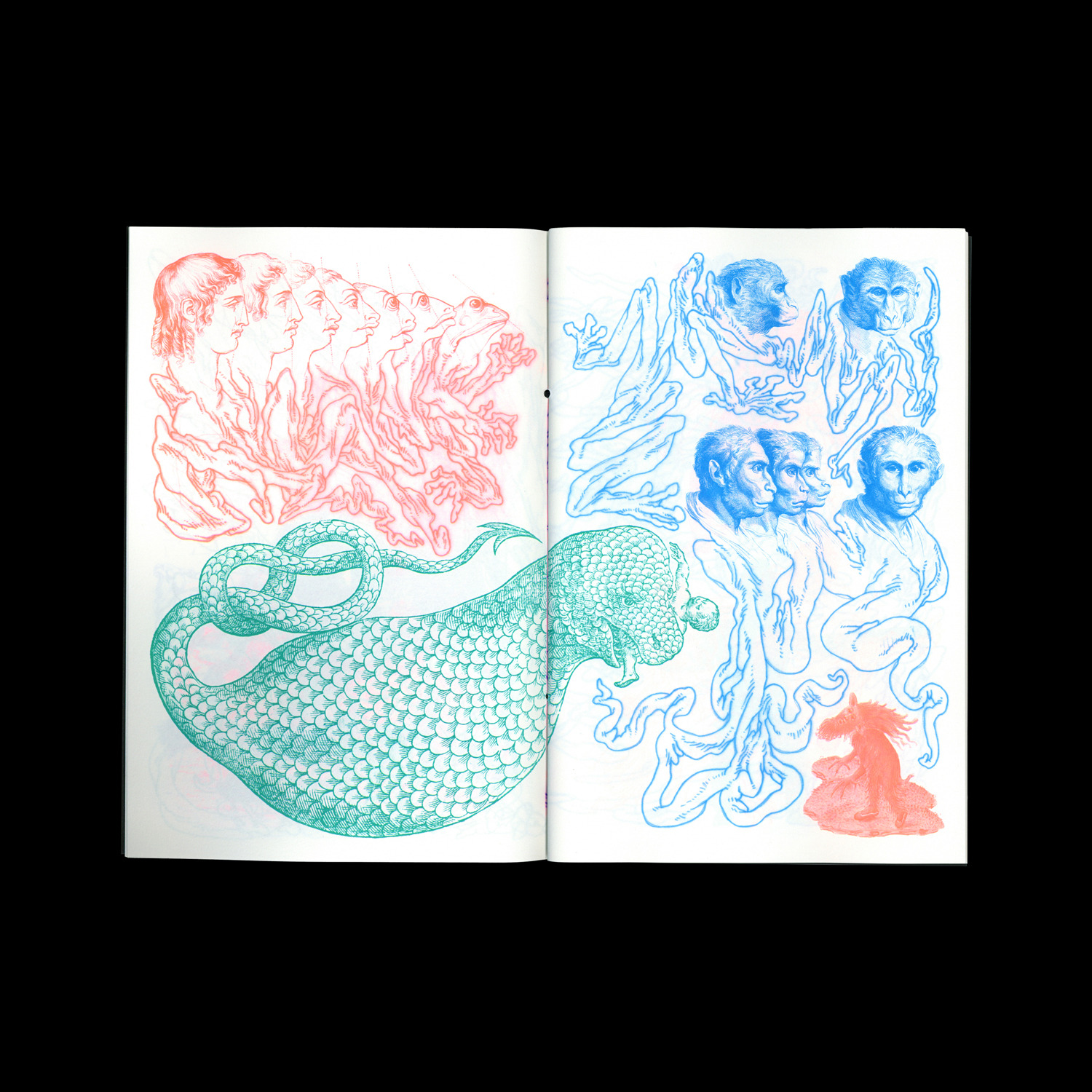
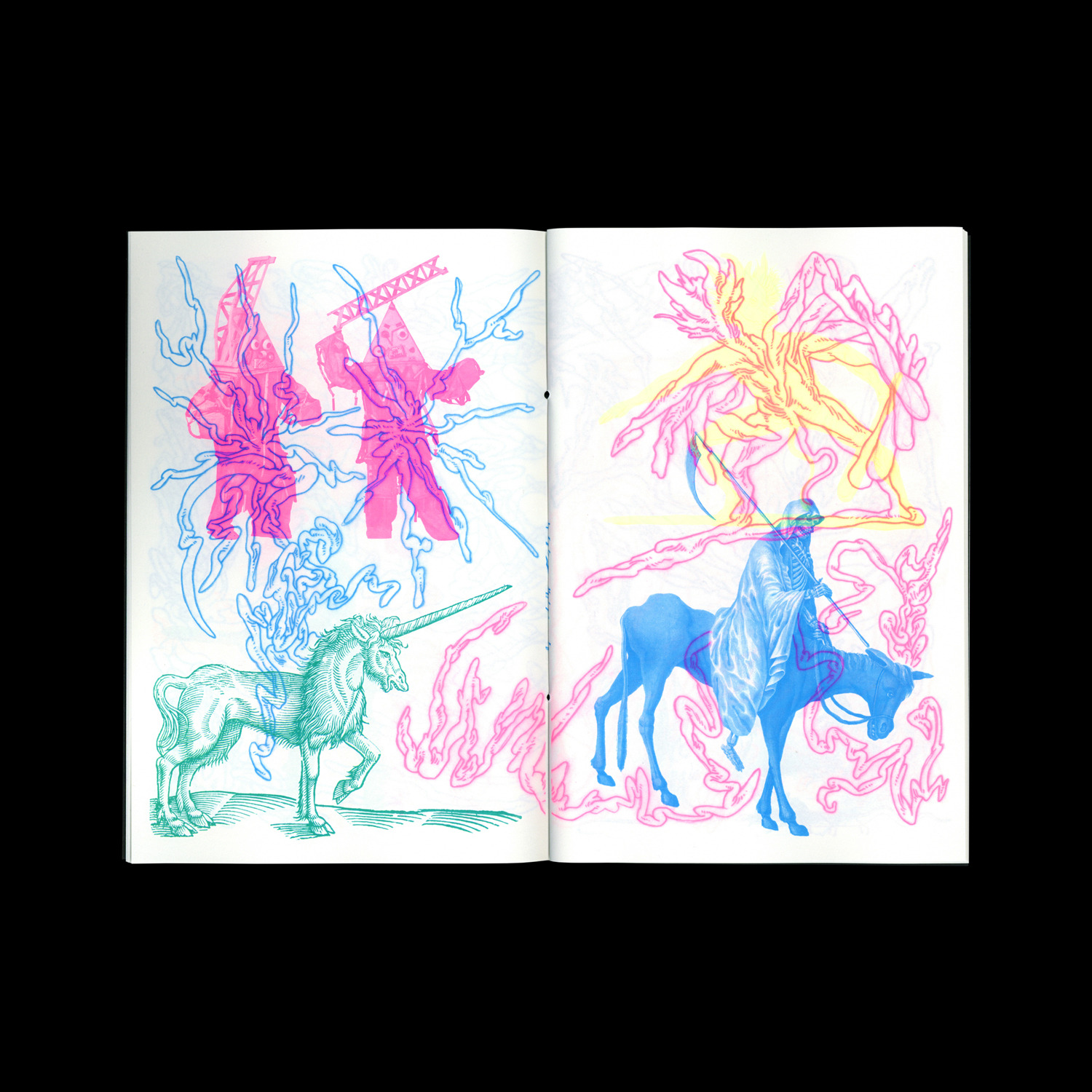
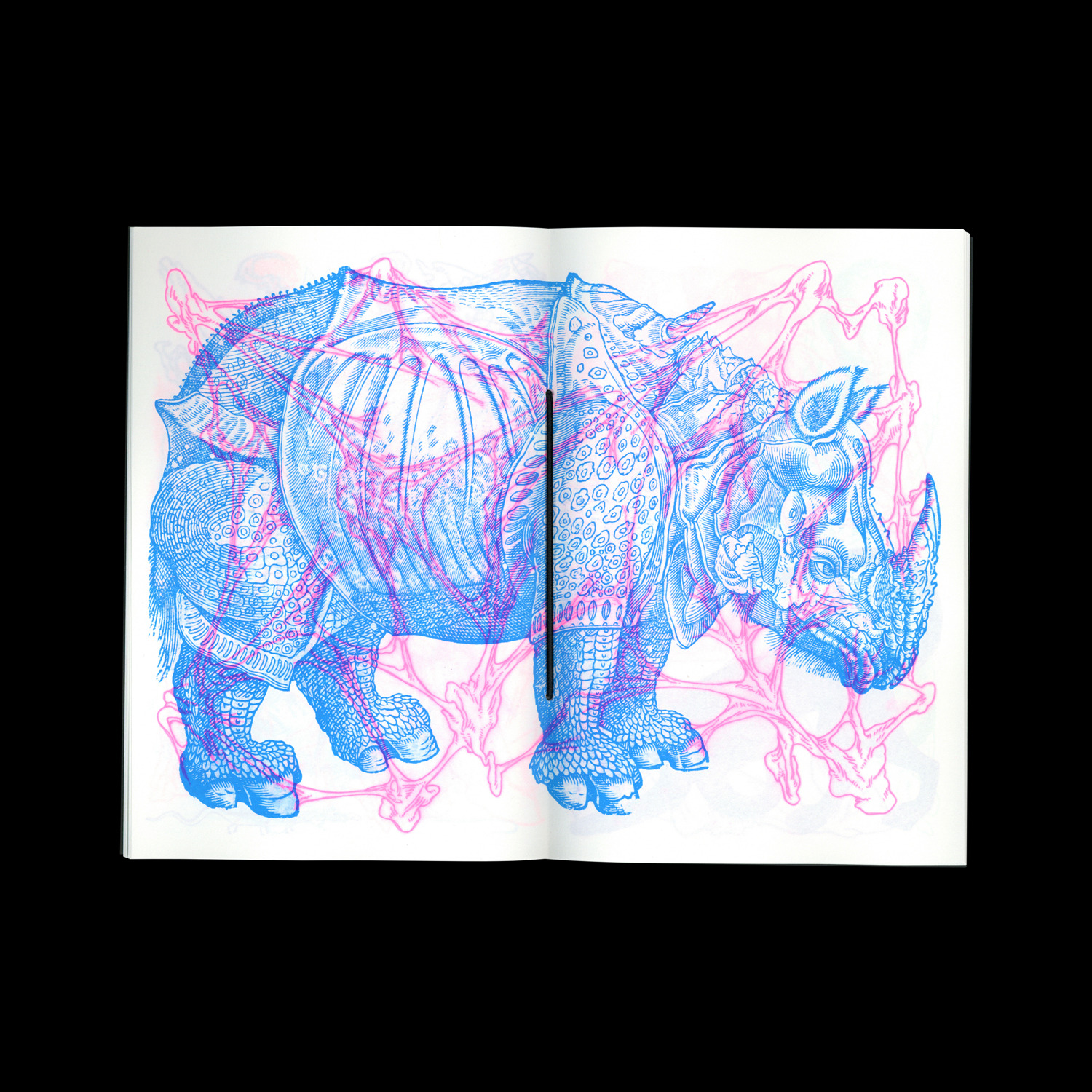
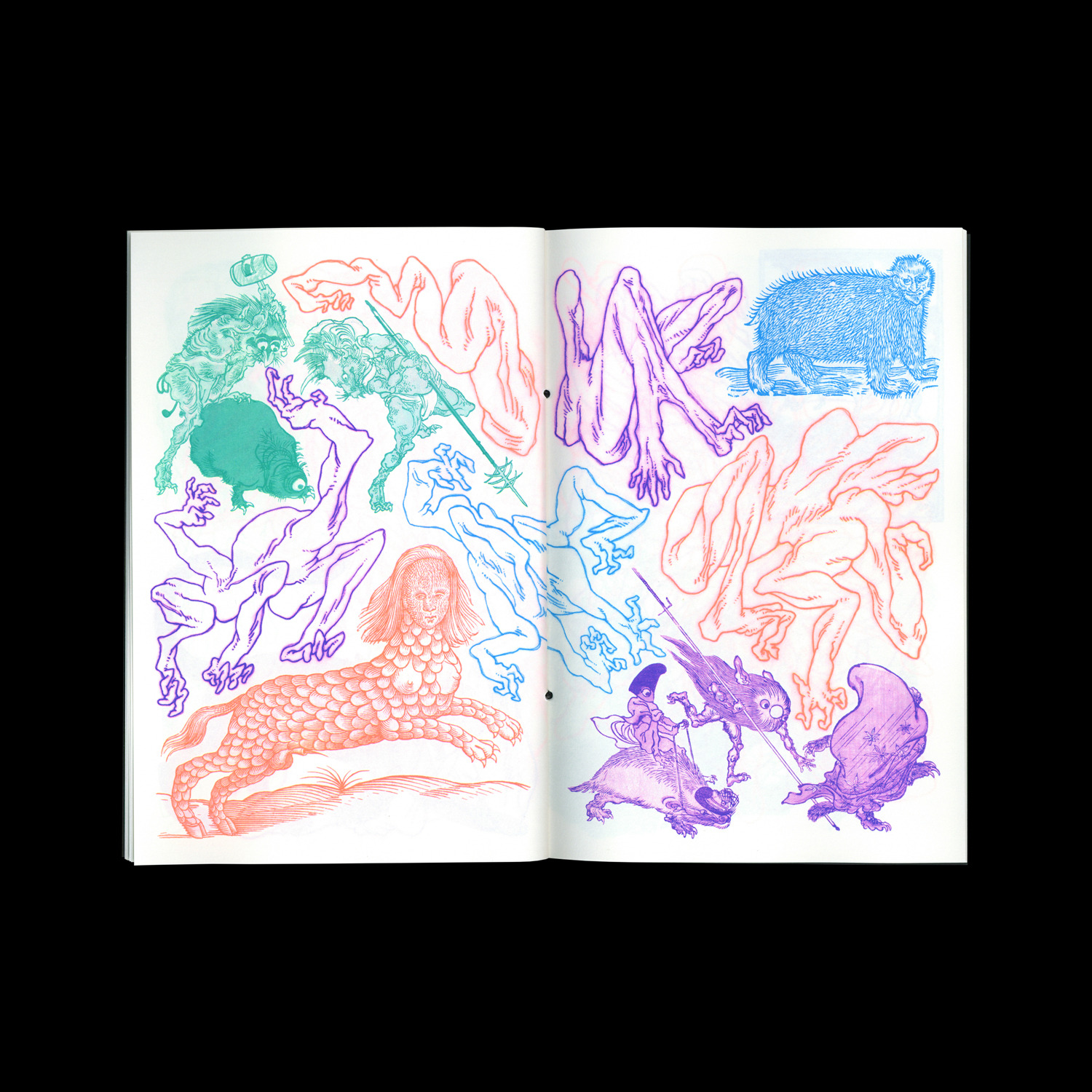
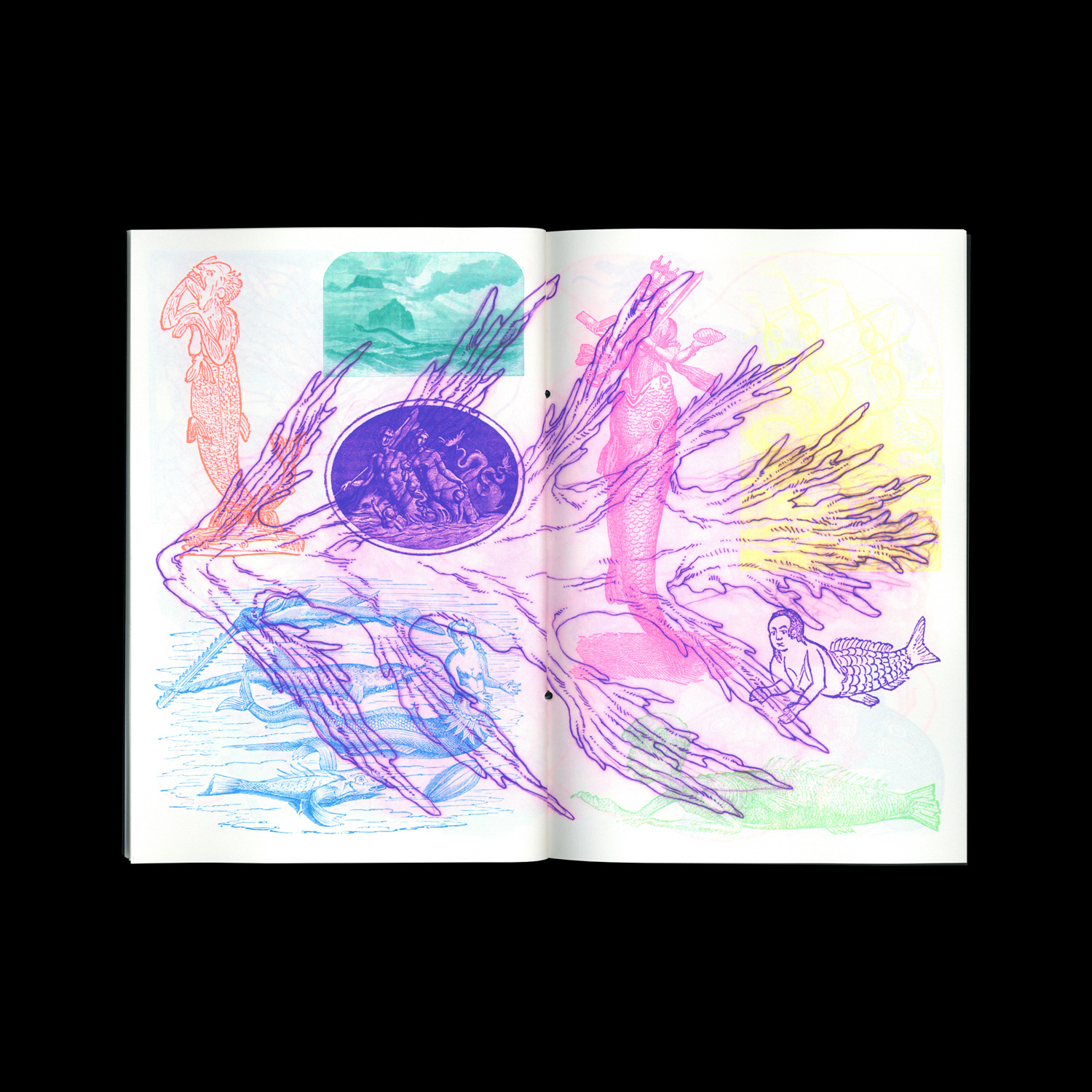
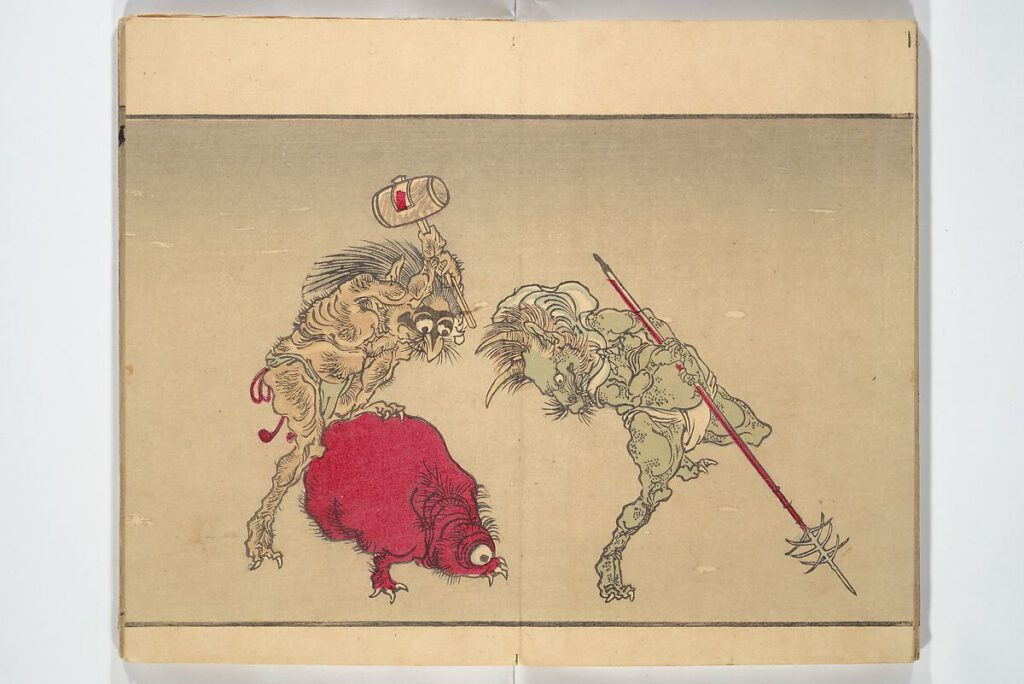
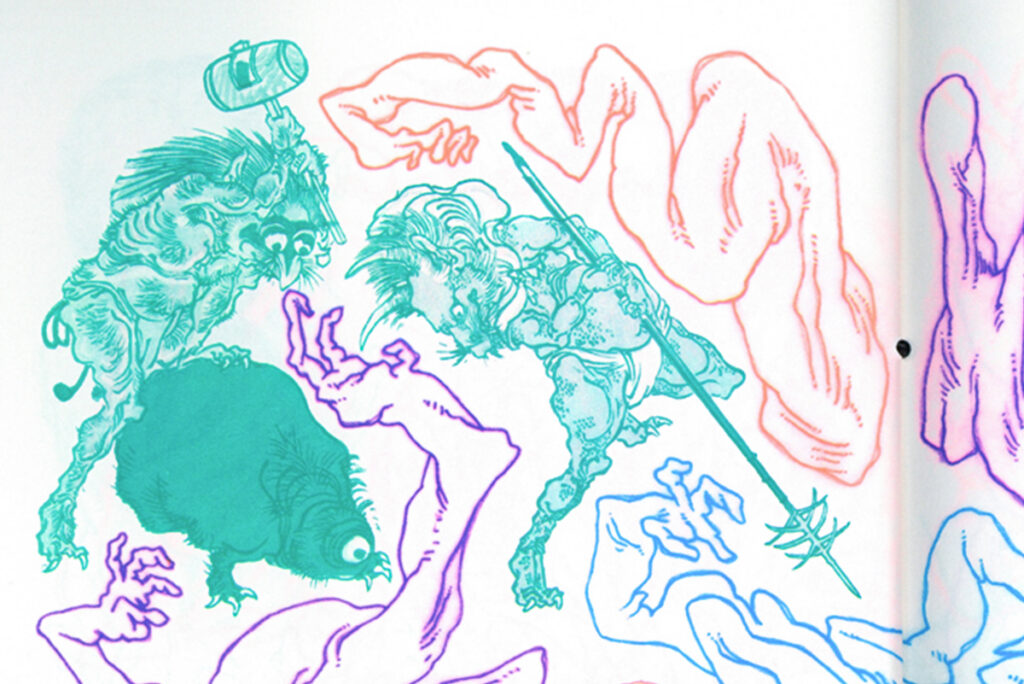
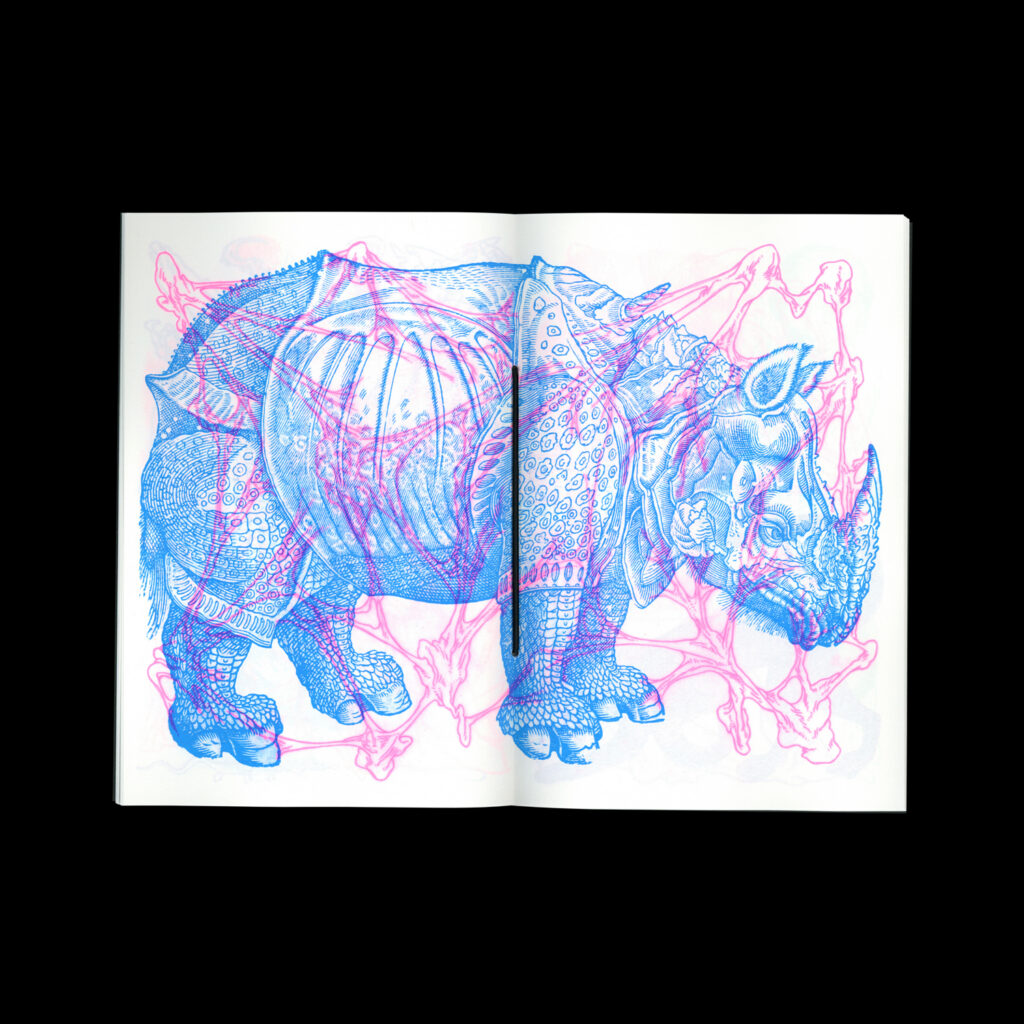
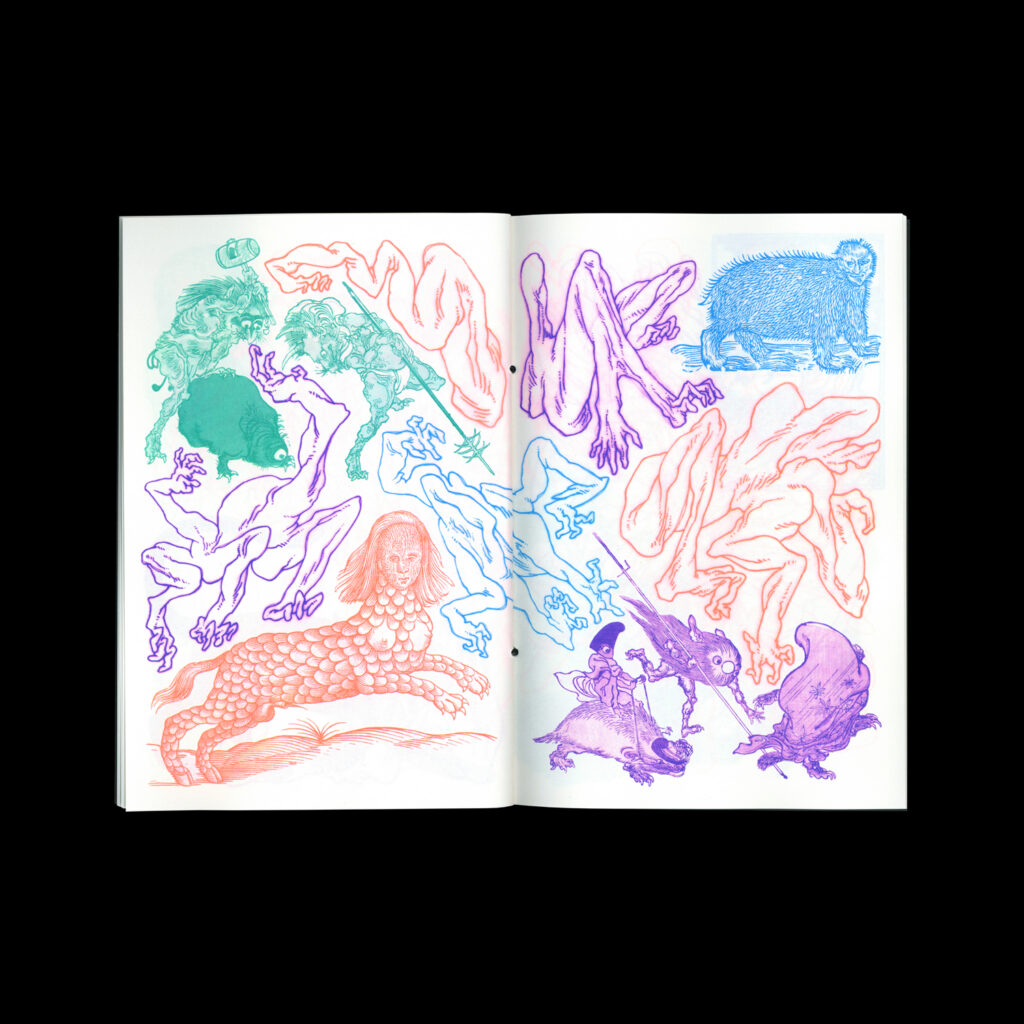
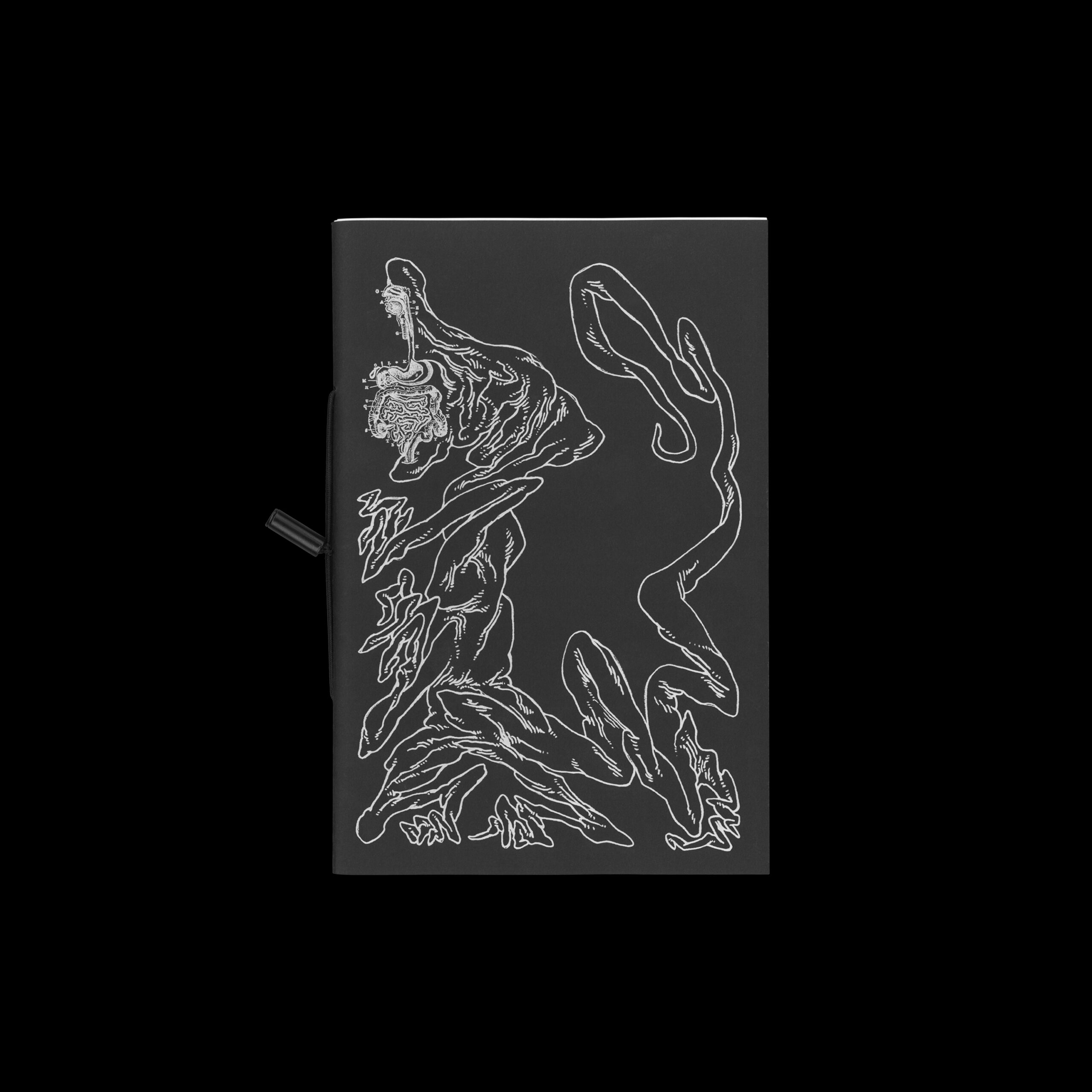
나준흠의 『엑스트라 바디(Extra Body)』는 이러한 박물관, 도서관 등의 방대한 디지털 아카이브 속 파편화된 사료들을 수집하고 엮음으로써 이 모든 데이터에 새로운 신체, 즉 ‘엑스트라 바디(Extra Body)’를 부여한다. 알브레히트 뒤러(Albrecht Dürer, 1471~1528)의 〈코뿔소(The Rhinoceros)〉, 크리스토프 얌니처(Christoph Jamnitzer, 1563~1618)의 『새로운 그로테스크 문양집(Neuw Grotteßken Buch)』(1610), 가와나베 교사이(河鍋暁斎, 1831~1889)의 『백귀화담(百鬼畵談)』(1890) 속 요괴 등 시간과 국적이 뒤섞인 여러 도상은 서로 전혀 무관하다. 그러나 대부분 ‘괴물’을 묘사한 이미지라는 점에서 시각적으로는 무척 유사하다. 세 개의 머리를 가진 사자, 용, 반인반수, 유니콘, 인어, 샤를 르 브룅(Charles Le Brun, 1619~1690)의 ‘사람-동물’ 스케치 등, 별색으로 인쇄된 여러 이미지는 대부분 신화 속, 혹은 상상 속의 괴물을 표현한 것이다.
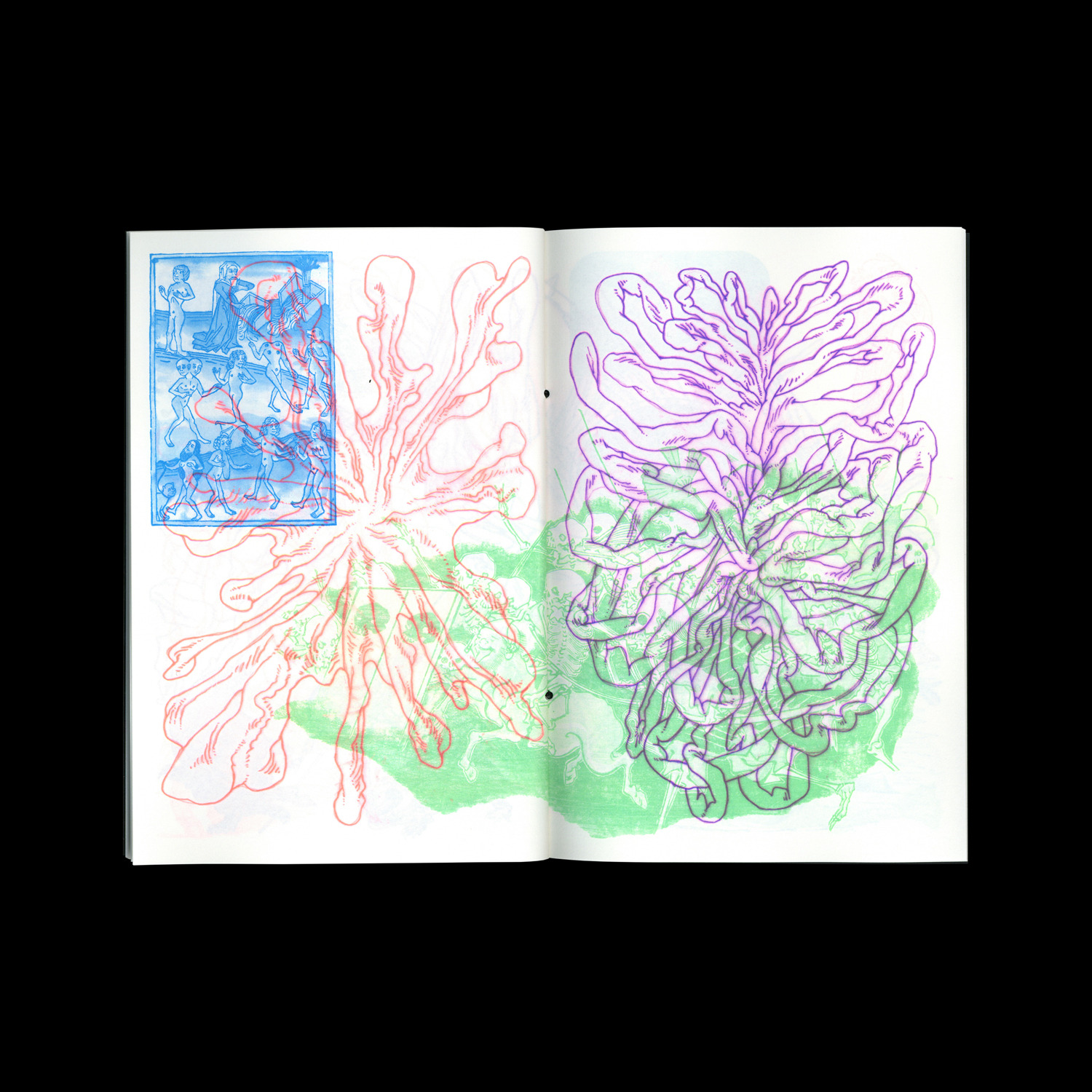
그렇다면 작가는 왜 괴물의 몸을 모았을까. 고전 이미지와 드로잉이 빚어낸 혼종적 형상이 그 이유를 암시한다. 내지의 여러 신체 도상은 근대 휴머니즘의 백인/남성-중심주의에 기반한 ‘인간’에서 벗어난 불온한 형태이다. 각 시대에 따라 정상과 비정상, 인간과 비인간, 문명과 야만, 나와 타자의 경계를 설정하기 위해 인위적으로 만들어진 몸들이다.②❷알렉사 라이트, 『괴물성: 시각 문화에서의 인간 괴물』, 이혜원·한아임 역 (서울: 범고래출판사, 2021), 205. 나준흠의 그로테스크하고 유기적인 펜드로잉은 지면 위 소위 ‘비정상’이라 일컬어지는 기괴한 몸들을 이어 붙인다. 작가의 선은 각기 다른 이미지, 역사, 종(種)이 뒤섞인 화면 속에서 도상 하나하나를 꿰뚫으며 새로운 신체를 만들어낸다. 책의 페이지를 넘길 때마다 이질적인 형상들을 조합하는 시각 실험이 펼쳐지고, 데이터의 바다에 흩뿌려졌던 옛 이미지들은 일련의 혼종체로 재탄생하여 생명력을 얻는다.
Translated automatically into English via AI agent.
Since the British Museum opened as the world’s first national public museum in 1759, museums have come to place greater emphasis on expanding access to art and knowledge than ever before. Today, that mission extends into the digital realm. Many major museums and libraries now provide open access to high-resolution images of their collections, allowing anyone to access their collections in digital form.①❶According to the definition adopted at the Extraordinary General Assembly of ICOM(International Council of Museums) in Prague in August 2022, a museum is an institution that is “open to the public, accessible and inclusive.” In this context, digital technology is an important means of expanding the accessibility of museums.: “Museum Definition,” International Council of Museums (ICOM), https://icom.museum/en/resources/standards-guidelines/museum-definition/; “Missions and Objectives,” International Council of Museums (ICOM), https://icom.museum/en/about-us/missions-and-objectives/. The Metropolitan Museum of Art offers online access to information on more than 490,000 objects, while the British Museum has made a significant portion of its collection of over two million objects searchable through its website. Digitized into high-resolution images, these physical collections gain new potential as material for creation.
Junheum Na’s Extra Body begins in the archive. It collects and weaves together fragments from vast digital archives, granting all of this data a new body — an Extra Body. The book assembles images that originally have little or nothing to do with one another: Albrecht Dürer’s The Rhinoceros(1515), Christoph Jamnitzer’s Neuw Grotteßken Buch(1610), the supernatural creatures from Kawanabe Kyōsai’s Pictures of One Hundred Demons[hyakki gadan](1890). Yet, despite their different origins, they share a striking visual resemblance. Most of them depict monsters. Three-headed lions, dragons, unicorns, mermaids, and Charles Le Brun’s studies of human-animal hybrids appear throughout the book. Many of these images are printed in spot colors and depict mythical or imagined creatures.
『The monsters from Pictures of One Hundred Demons(1890), appropriated in Extra Body*. (출처: The Metropolitan Museum of Art)
Why, then, does the artist gather the bodies of monsters? The hybrid forms conjured by these historical images and drawings offer a clue. The bodies that appear throughout the book are subversive forms that exist outside the idea of the Man shaped by the white, male-centered ideals of modern humanism. Across different periods, such figures were invented to define the boundaries between the normal and the abnormal, the human and the nonhuman, civilization and barbarism, the self and the other.②❷Alexa Wright, Monstrosity: The Human Monster in Visual Culture, trans. Hyewon Lee and Aim Han (Seoul: Beomgorae, 2021), 205.Na’s organic, grotesque pen drawings stitch these so-called abnormal bodies together on the page. His lines thread through images drawn from different histories and species, binding them into a single hybrid body. As the pages turn, unexpected combinations emerge one after another. Images once scattered across vast digital archives are reborn as a series of hybrid bodies — strange, composite, and startlingly alive.
Writer
고현경Hyun Go
시각디자인을 전공하고 예술학 석사 과정에서 미술출판을 연구하고 있다. 디지털 시대의 출판을 다룬 『디지털 네트워크로 출판하기』(AABB, 2025), 문화사 속 숨겨진 출판의 역사를 발굴한 『Do or DIY』(미디어버스, 2026)의 저자이자 디자이너다.Hyun Go holds a BFA in Visual Communication Design and is currently pursuing an MA in Art Studies with a focus on art publishing in Korea. She is the author and designer of Publishing Through Digital Networks (AABB, 2025), a self-initiated project on publishing in the digital age, and the bilingual Korean-English edition of Do or DIY (Mediabus, 2026).