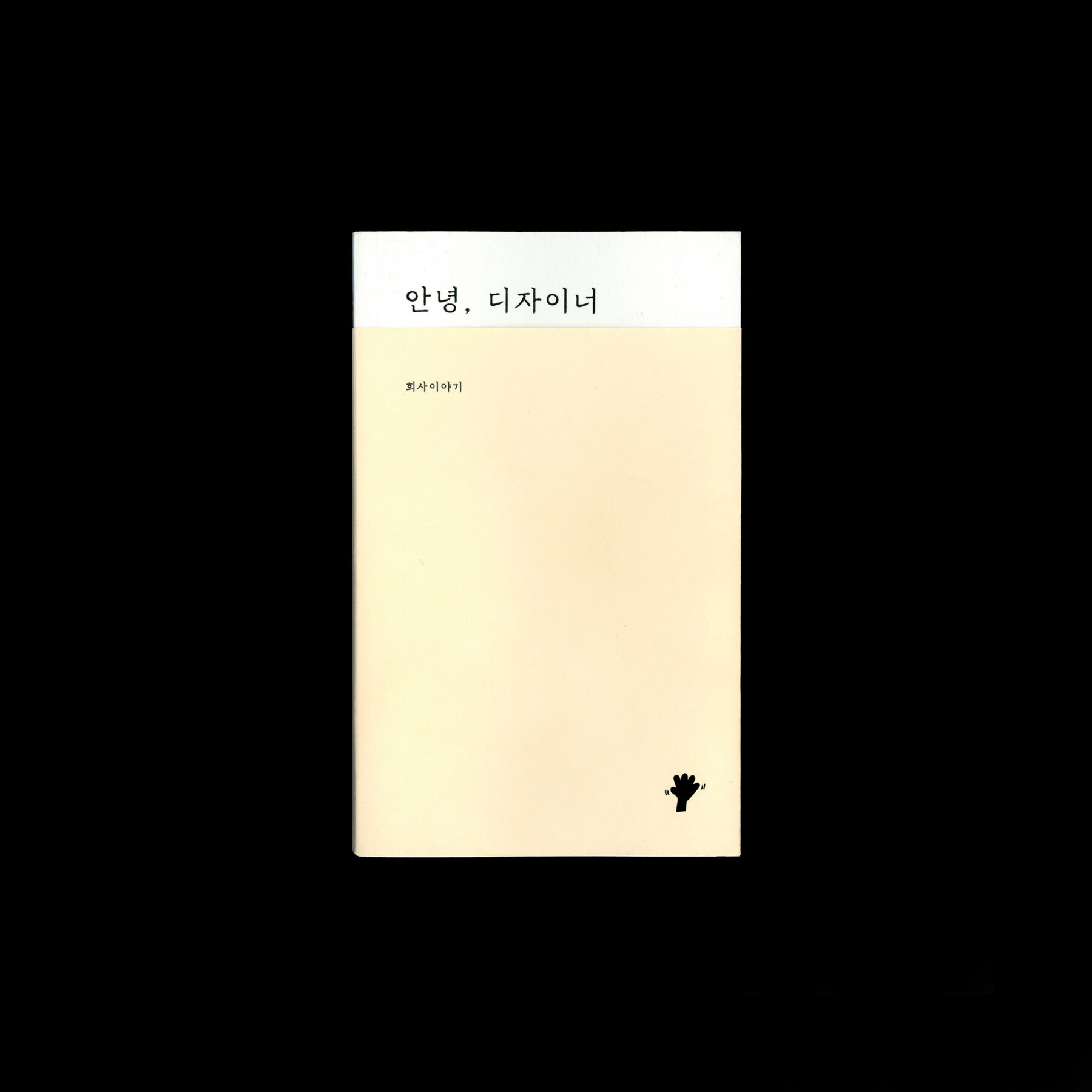
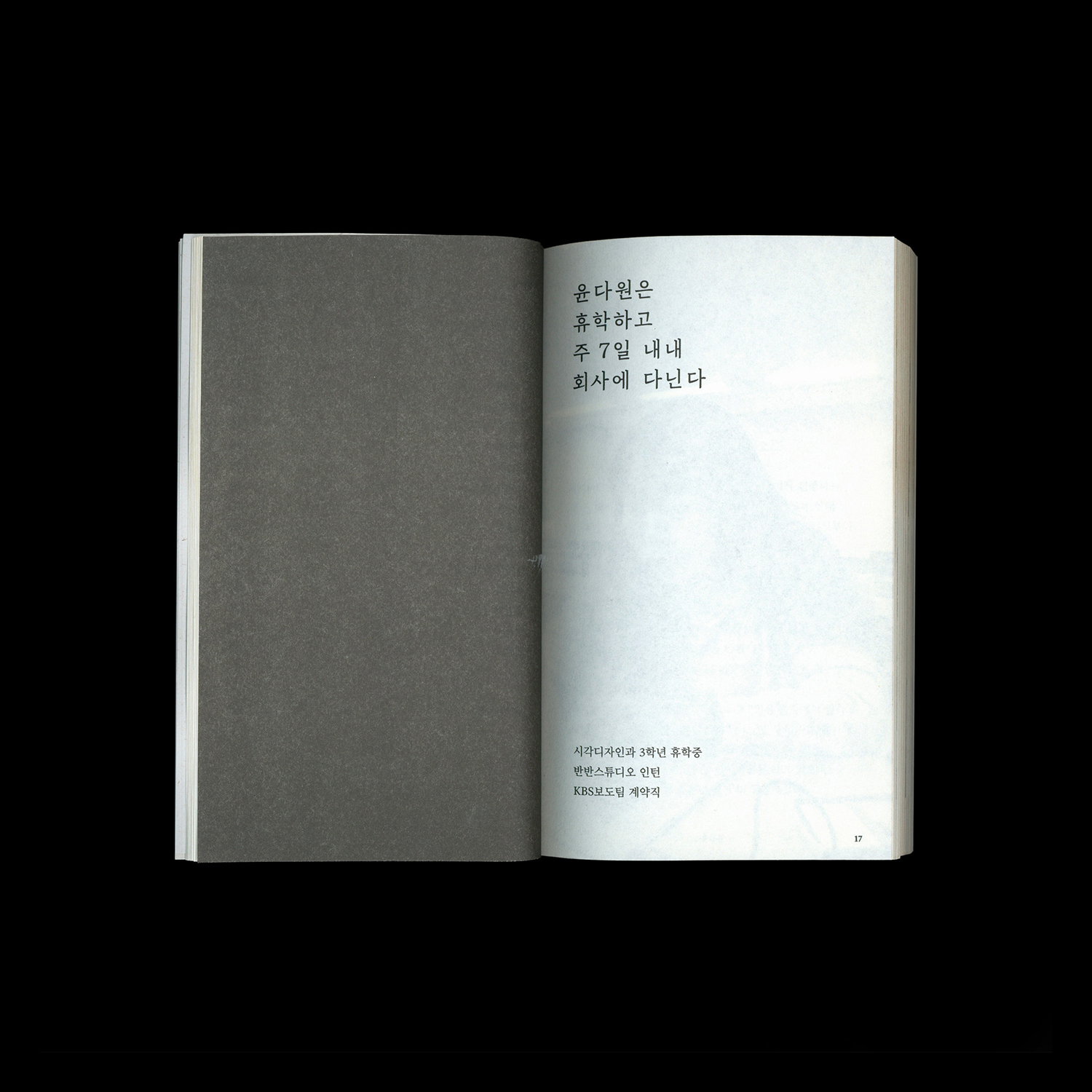
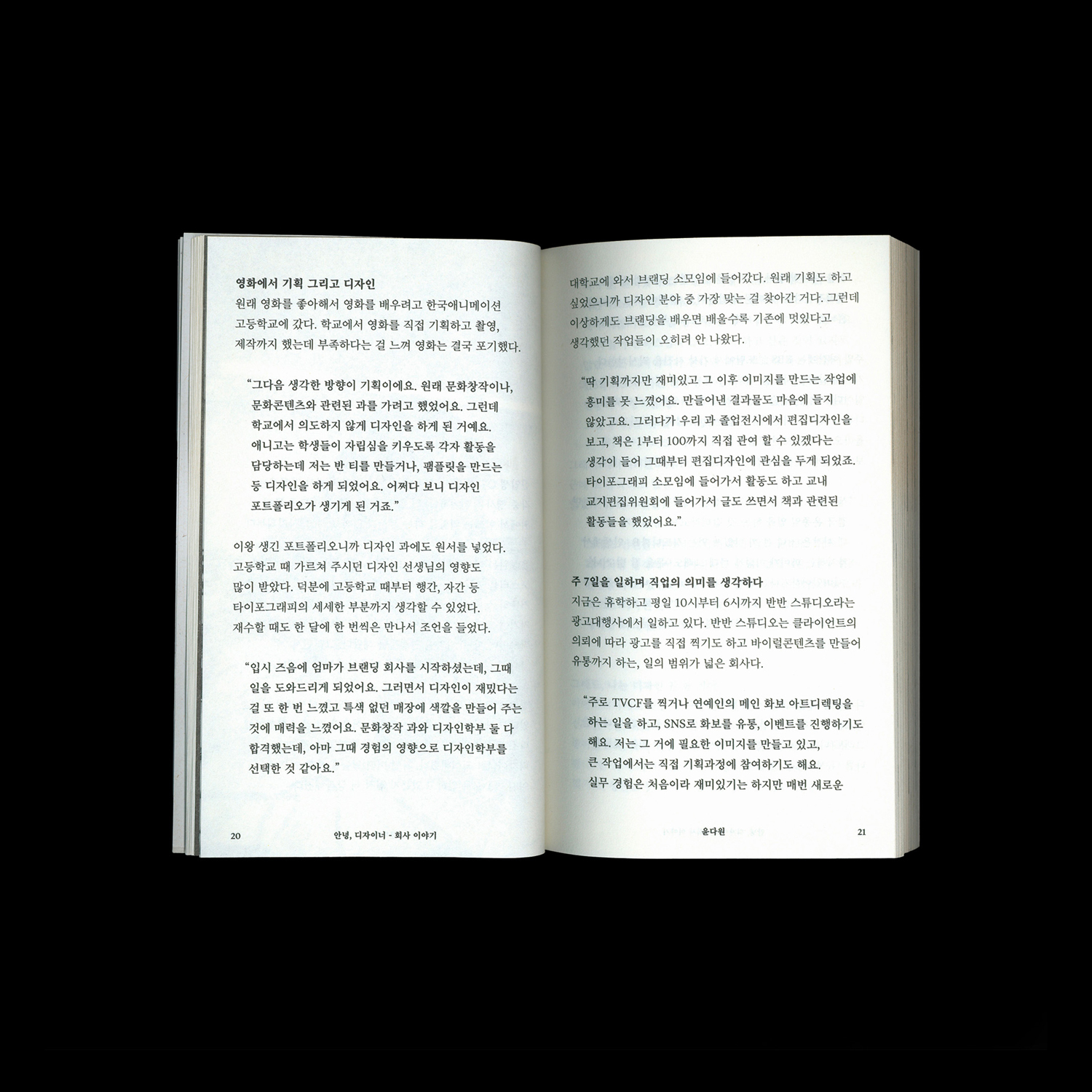
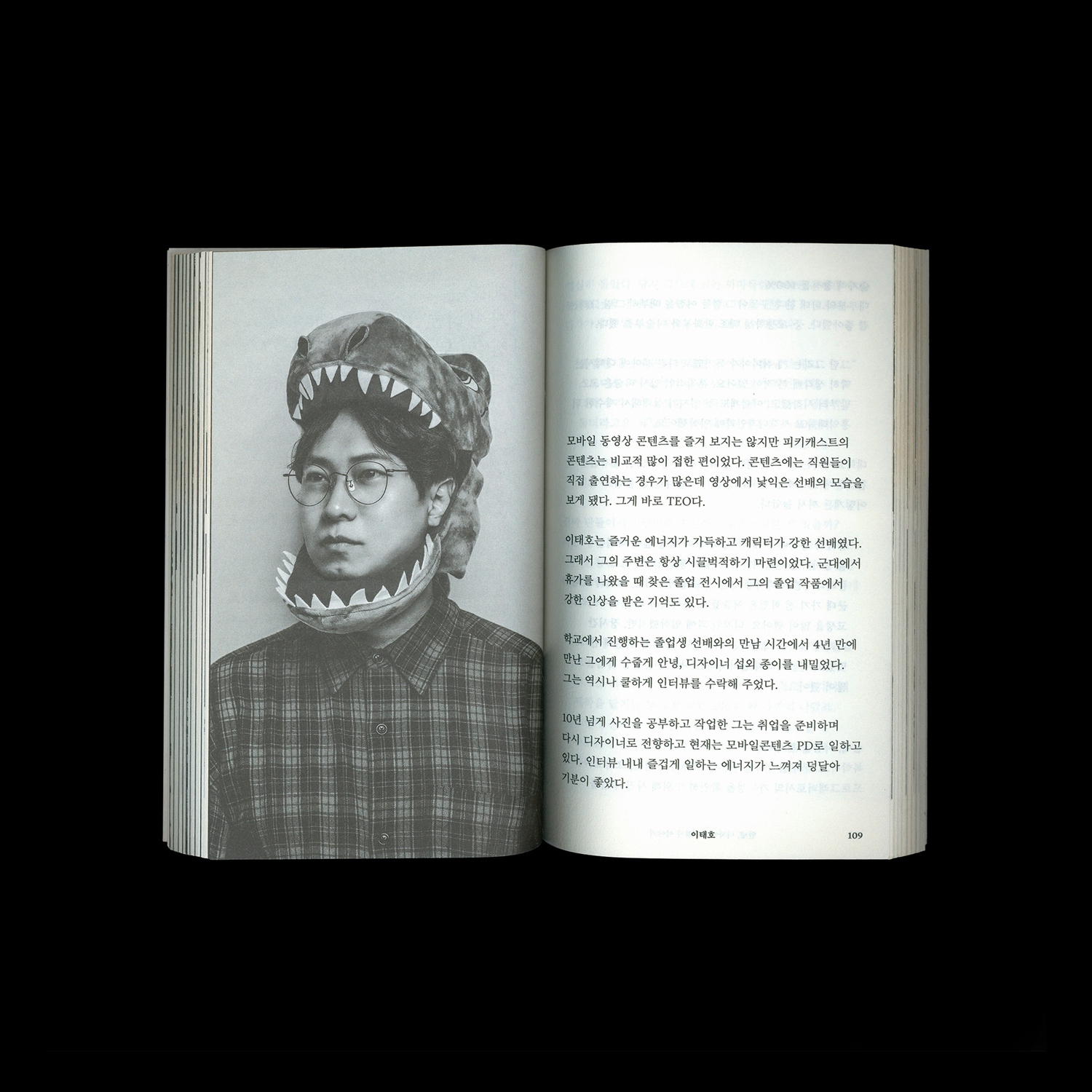
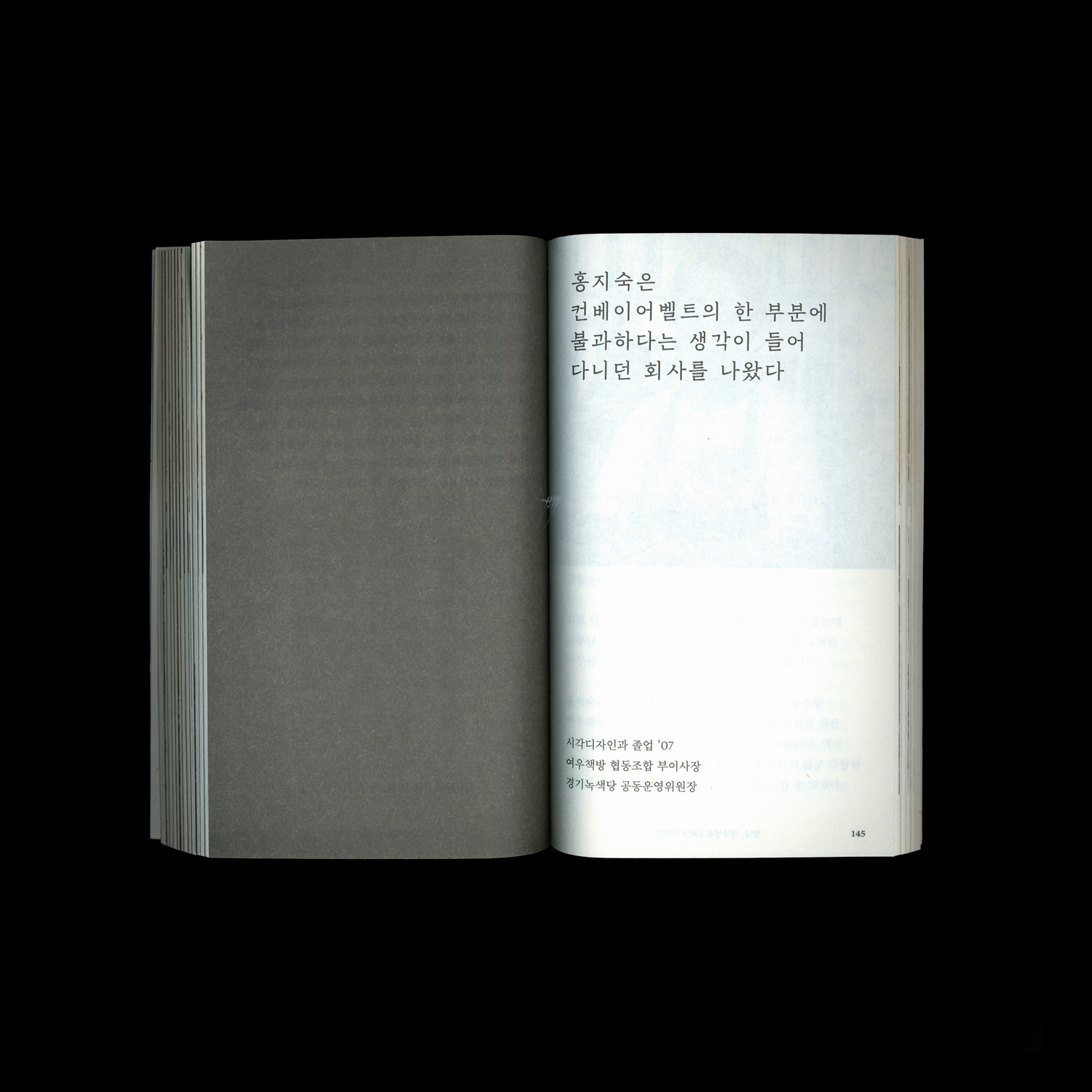
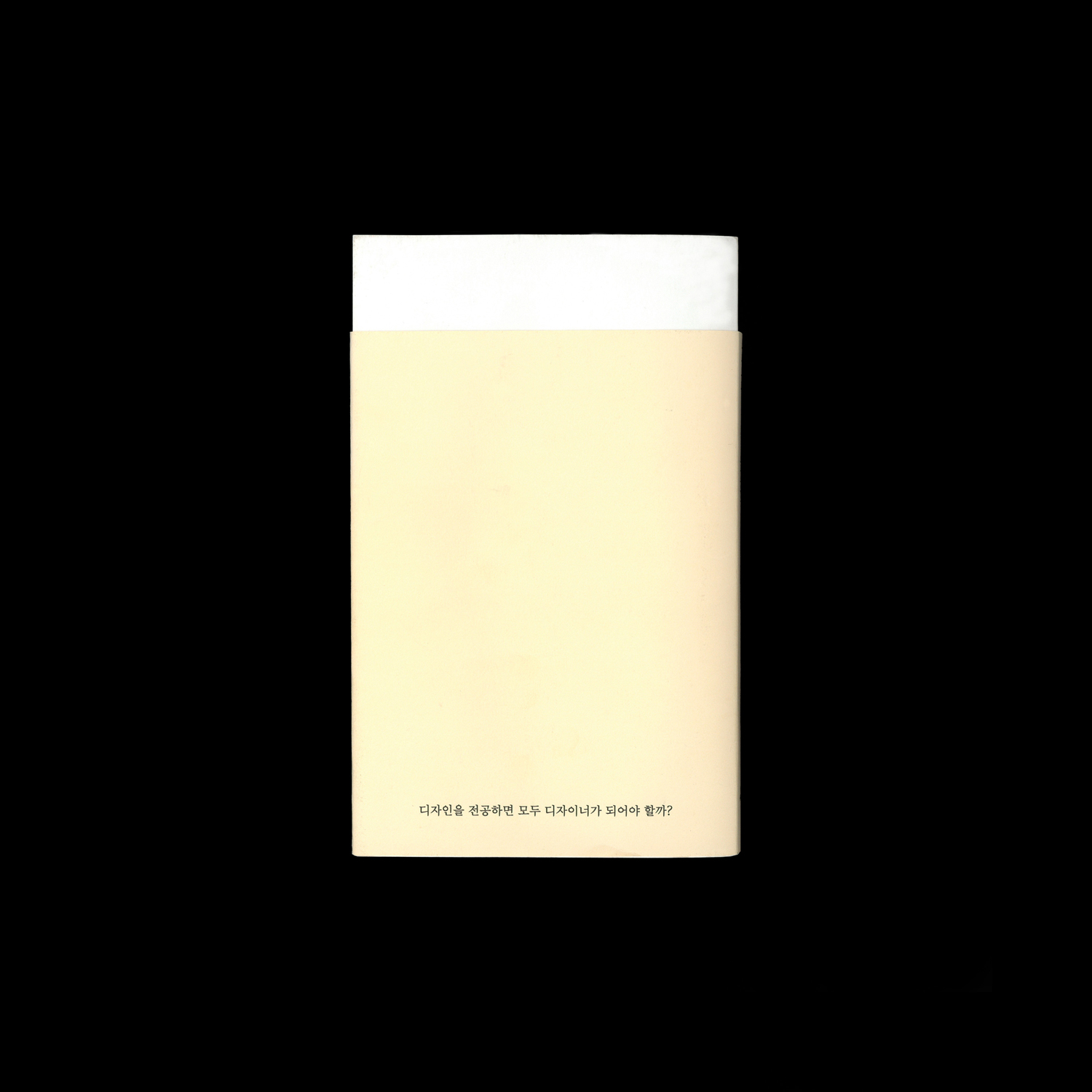
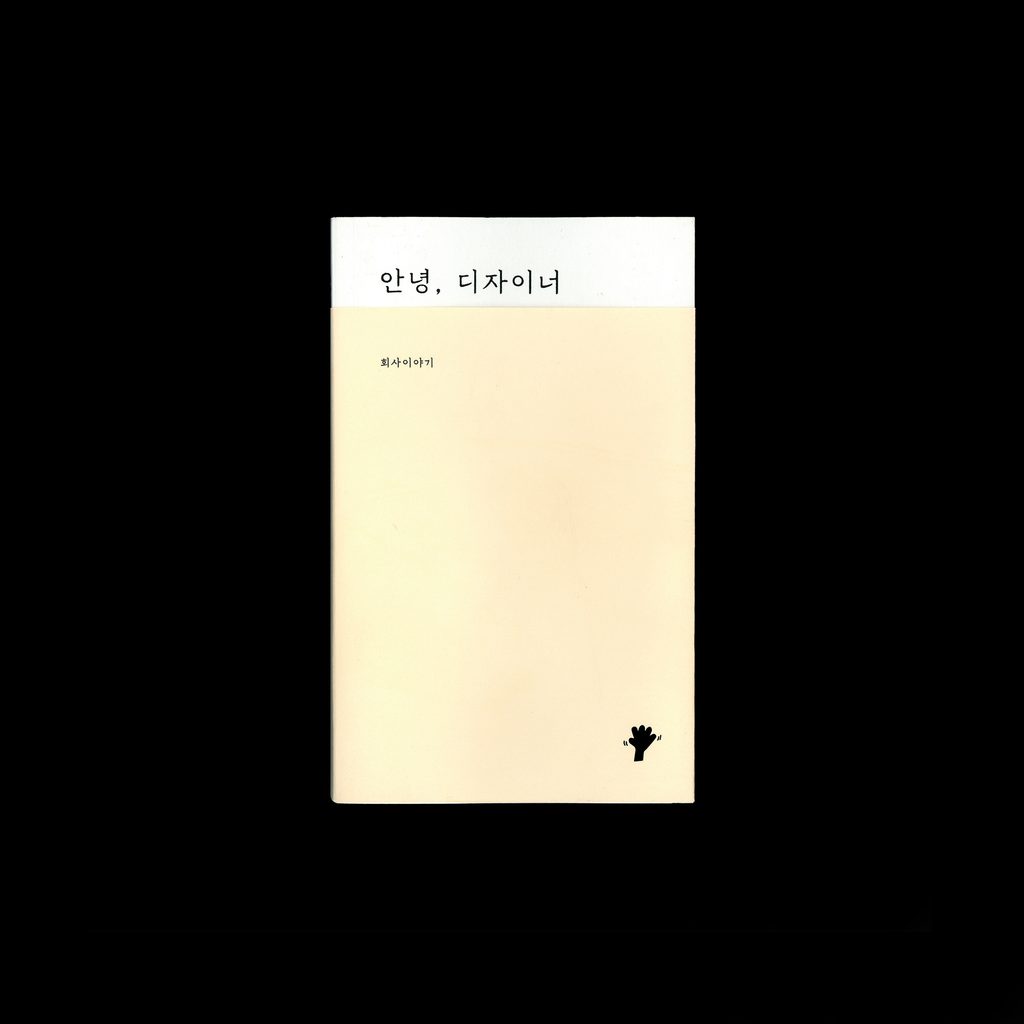
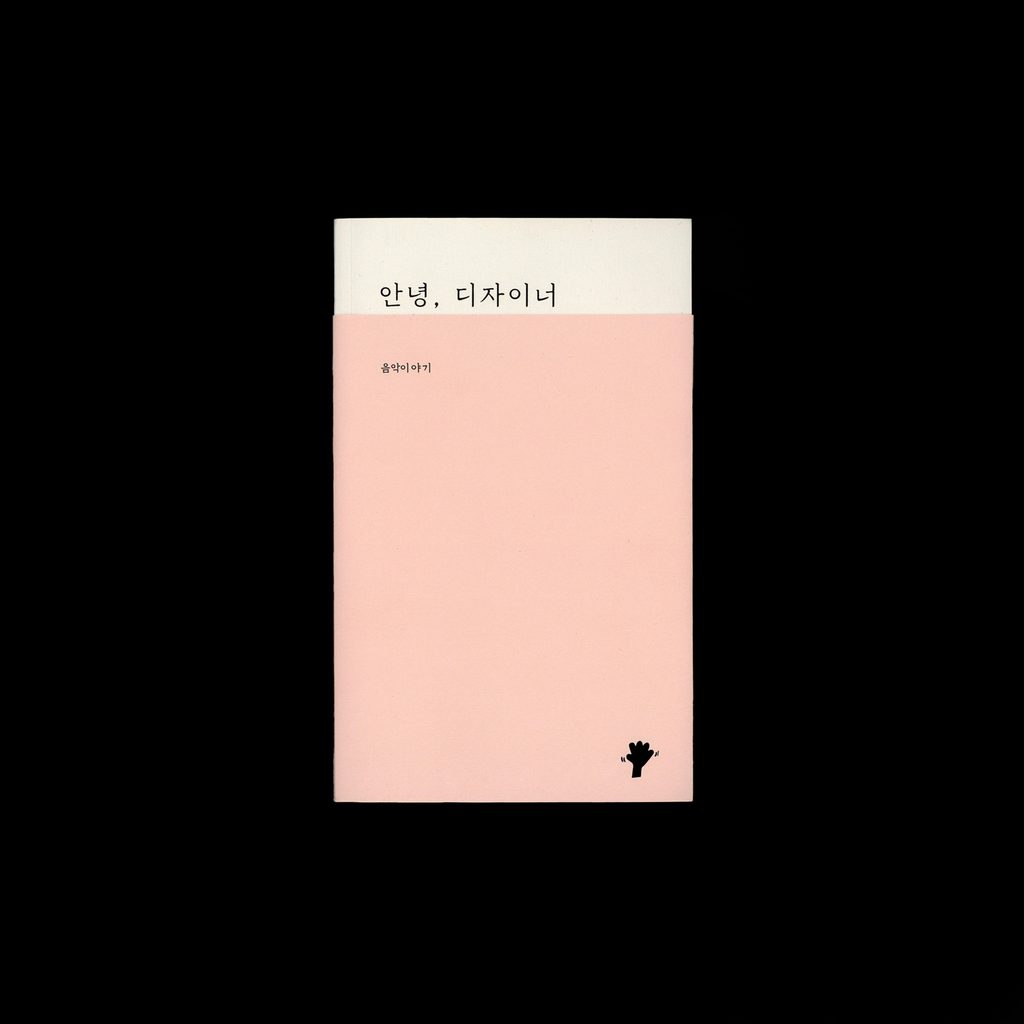
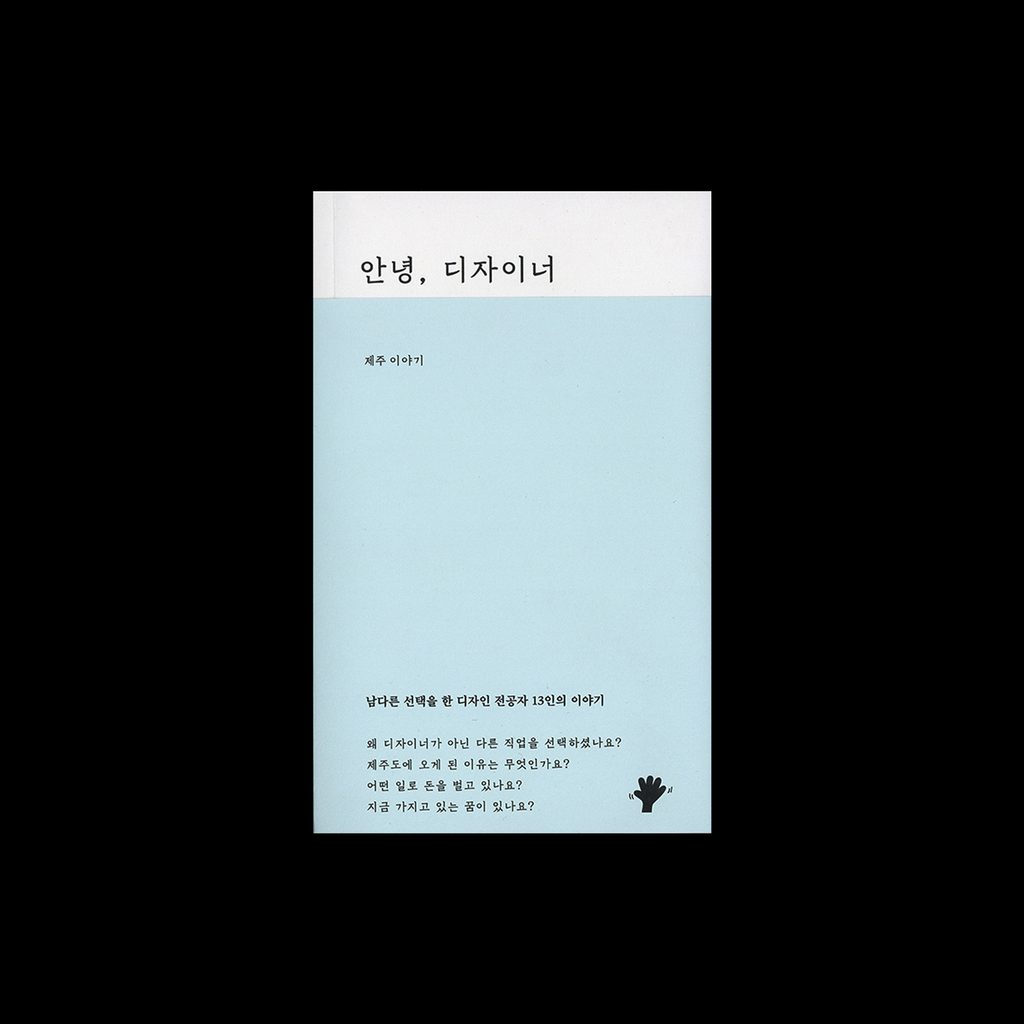
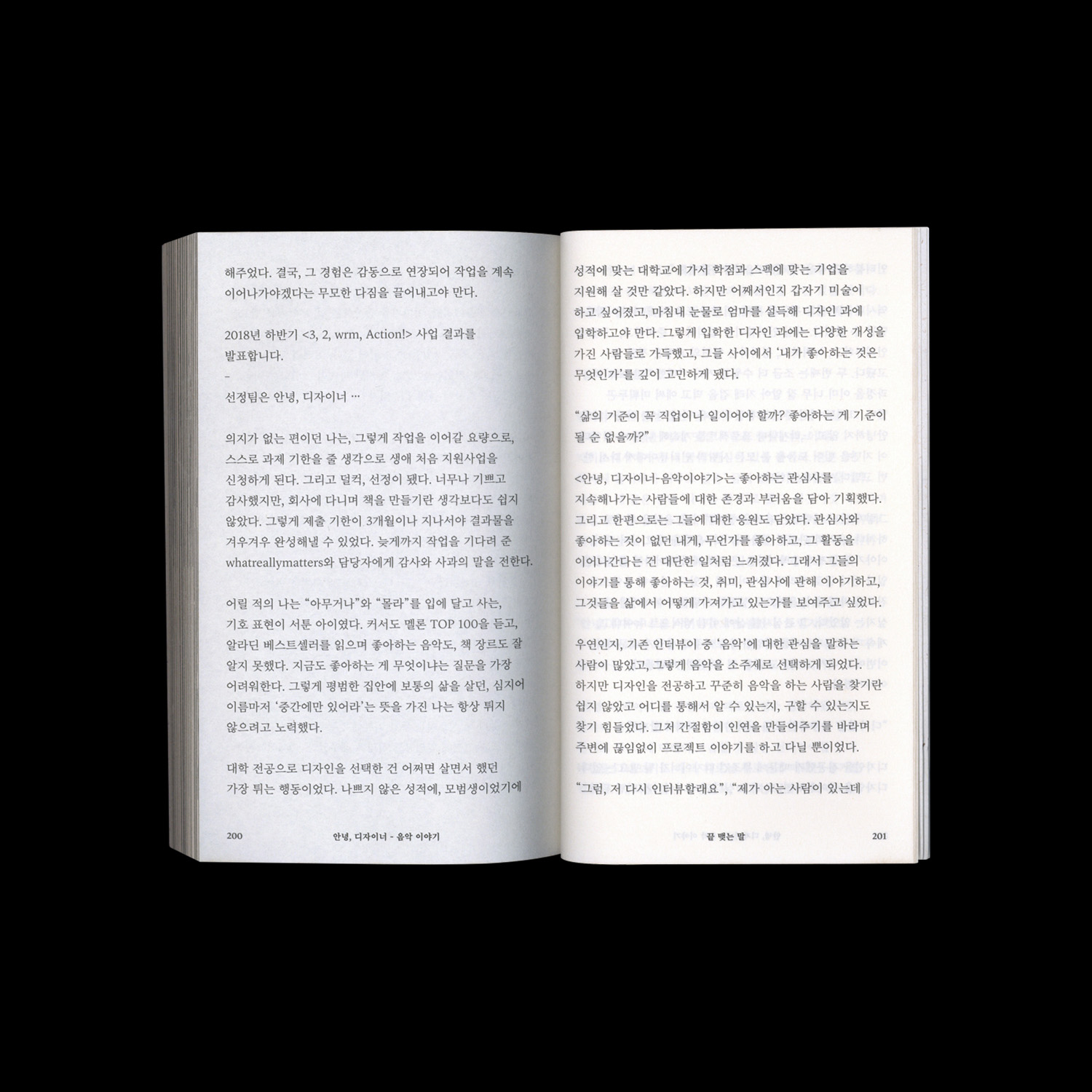
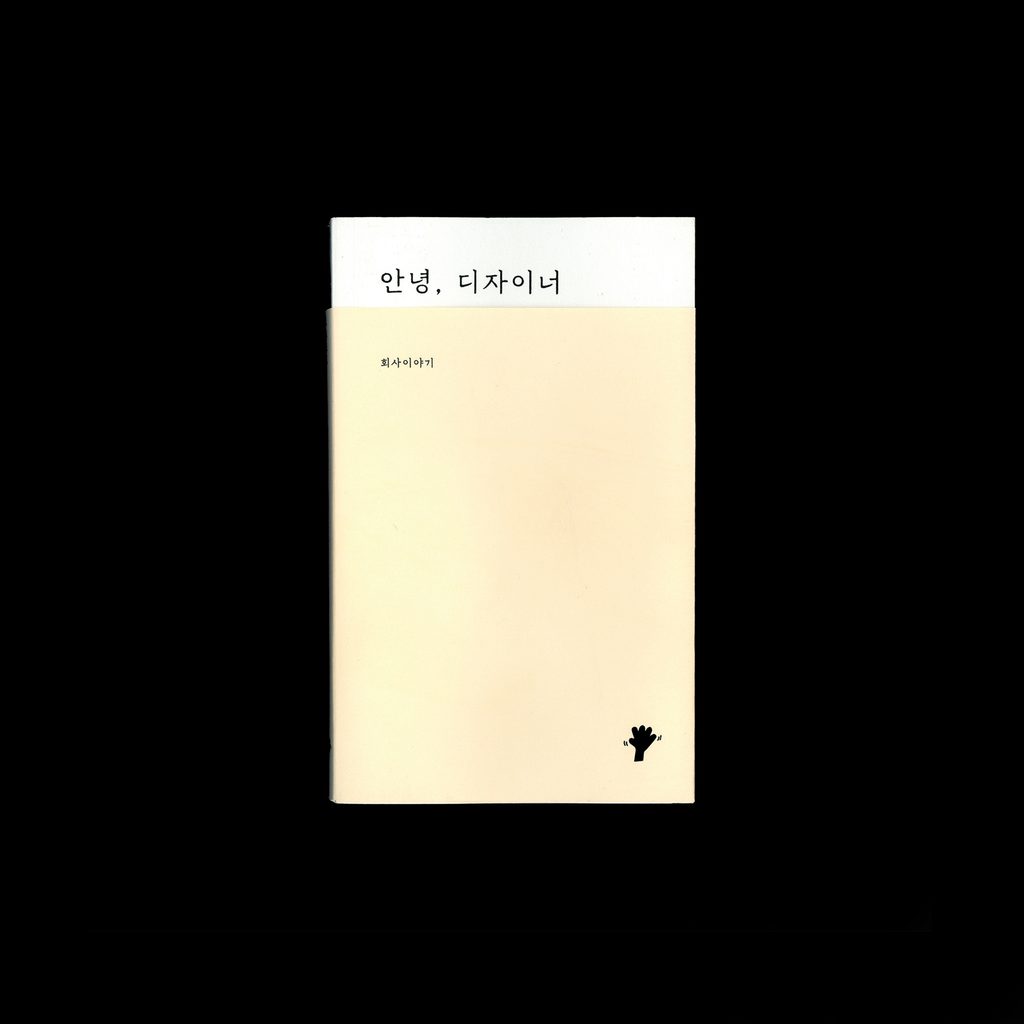
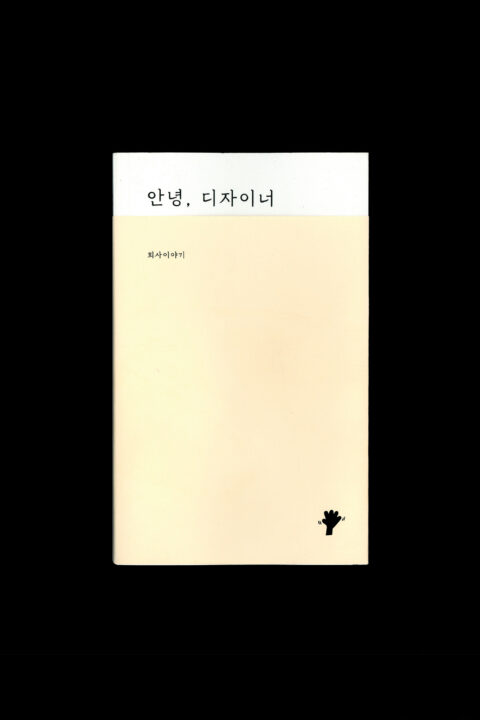
『안녕, 디자이너』는 디자인을 전공한 사람들의 다양한 이야기와 고민을 기록한 인터뷰집이다. 「회사 이야기」(2018), 「음악 이야기」(2019), 「제주 이야기」(2024)라는 부제로 총 3권을 출간했다. 각각 ‘회사’, ‘음악’, ‘제주’라는 키워드를 큰 틀로 하여 디자인을 전공한 여러 인물의 목소리를 담았다.
『안녕, 디자이너』 시리즈
저자 이재중은 대학교에서 디자인을 전공했지만, 졸업 이후 전공을 살릴 생각이 없었다. 학교에서 다른 학생들의 멋진 작업을 보며 ‘세상에 대단하고 뛰어난 디자이너가 많다’라는 생각을 했고, 자신은 디자이너 대신 다른 길을 택해야겠다는 결론을 내렸다고 한다. 이후 그는 ‘디자인 안 할 거예요’라는 말을 밥 먹듯이 달고 살았지만 정작 자신과 같은 고민을 했던 사람들, 다른 길을 택한 선배들이 어떻게 살고 있는지 알지 못했다. 이들의 삶을 직접 알아보고 이야기를 들어야겠다는 생각에서 시작된 프로젝트가 바로 『안녕, 디자이너』이다.
일반적으로는 전공과 다른 직무에서 일하는 것이 특이한 것이 아닌데, 유독 디자인이나 미술을 전공한 사람들은 전공을 살리지 않으면 안 된다는 강박이 있는 듯하다는 것이었어요. 그럴 만한 것이, 미대를 진학하는 경우는 대부분 대입을 준비하면서 다른 전공에 비해 조금 더 명확히 진로를 정하는 경우가 많잖아요. 그렇기에 일찍부터 선택해서 진학한 학과에서 배운 걸 살리지 않는 것에 대한 두려움이 있는 것 같아요. (…) [하지만] 디자인을 모르는 상태로 살아온 시간이 더 길고, 앞으로 다른 것을 시도해 볼 기회도 많다고 생각해요. ①❶「이재중(시각디자인 11) 동문을 만나다」, 『홍대신문』, 2024년 9월 3일, https://hiupress.hongik.ac.kr/news/articleView.html?idxno=11089
책 앞머리에 실린 저자의 말만 읽어 보아도 ‘디자인을 전공했지만 다른 길을 갈 수 있다’라는 명제가 이 책의 메시지라는 것을 알 수 있다. 그러므로 제목의 ‘안녕, 디자이너’는 사실 디자인을 전공했지만 디자이너를 직업으로 갖지 않겠다는 의지가 담긴 작별의 ‘안녕(goodbye)’이다.
그런데 책을 읽다 보면 “제목의 ‘안녕’이 과연 ‘굿바이’일까?”라는 질문이 떠오른다. 책의 인터뷰이로 참여한 디자인과 졸업생들(혹은 재학생들)은 분명 직업으로 디자이너를 택하지 않는 삶을 살아가고 있지만, 졸업 이후의 삶 자체가 디자인과 연관이 전혀 없다고 보기는 어렵다. 디자인과에서 익힌 여러 역량과 경험이 분명 그들의 라이프스타일에 녹아있다. 「회사 이야기」에서는 개인 사업자, 기획자, 개발자, 마케터 등 디자인 전공자의 강점(예컨대 시각언어를 활용한 의사소통 능력)을 다른 분야에서 살리고 있는 사람들의 경험을 수록했다. 「음악 이야기」에서부터 디자인 전공자라는 공통점을 갖고 자신이 좋아하는 것(이 책에서는 음악)을 전문적으로, 혹은 취미로 지속하는 사람들의 이야기가 실렸다. 「제주 이야기」에 이르러서 『안녕, 디자이너』의 관심사는 직업과 취미를 넘어 삶의 공간으로 확장되었는데, ‘제주’라는 지역에서 자신이 살고 싶은 방식을 직접 실천해 보는 인터뷰이들의 목소리를 담았다. 이처럼 『안녕, 디자이너』 3부작은 ‘일과 직업’, ‘취미와 좋아하는 것’, ‘삶의 공간’ 등 각기 다른 주제로 다양한 인생을 엮었다.
서로 다른 인터뷰이들의 답변에서는 디자인 전공자라는 것 외에도 또 하나의 공통점을 발견할 수 있다. 디자인을 직접 할 줄 알 뿐 아니라, 디자인을 배우며 익힌 감각(단순히 보는 것부터 어떤 정보를 시각적으로 편집, 정리하여 전달하는 방식 등)을 일상에서 자연스럽게 활용한다는 것이다. 진로 선택에 있어 디자이너라는 직업에는 ‘안녕’을 고했지만, 디자인과에서 체득한 경험과 관점은 인생에서 필요한 순간마다 불쑥불쑥 ‘안녕(hello)!’을 외치며 나타난다.
『안녕, 디자이너 – 음악 이야기』의 「맺음말」 중
결론적으로 이 책은 ‘디자인을 전공했다고 디자이너가 되어야 하는 것은 아니다’라는 메시지를 넘어, 오히려 ‘디자인을 전공한 경험과 역량이 다른 분야에서, 혹은 자아실현을 위해 어떻게 활용될 수 있는지’에 대한 이야기로 읽힌다. 전공을 살리지 않는다고 해서 대학에서의 시간이 무의미해지는 것이 아니다. 스스로 고민하고 본인만의 답을 찾아나간 과정은 삶 곳곳에 흔적을 남기고, 각자만의 빛깔을 만들어 낸다.
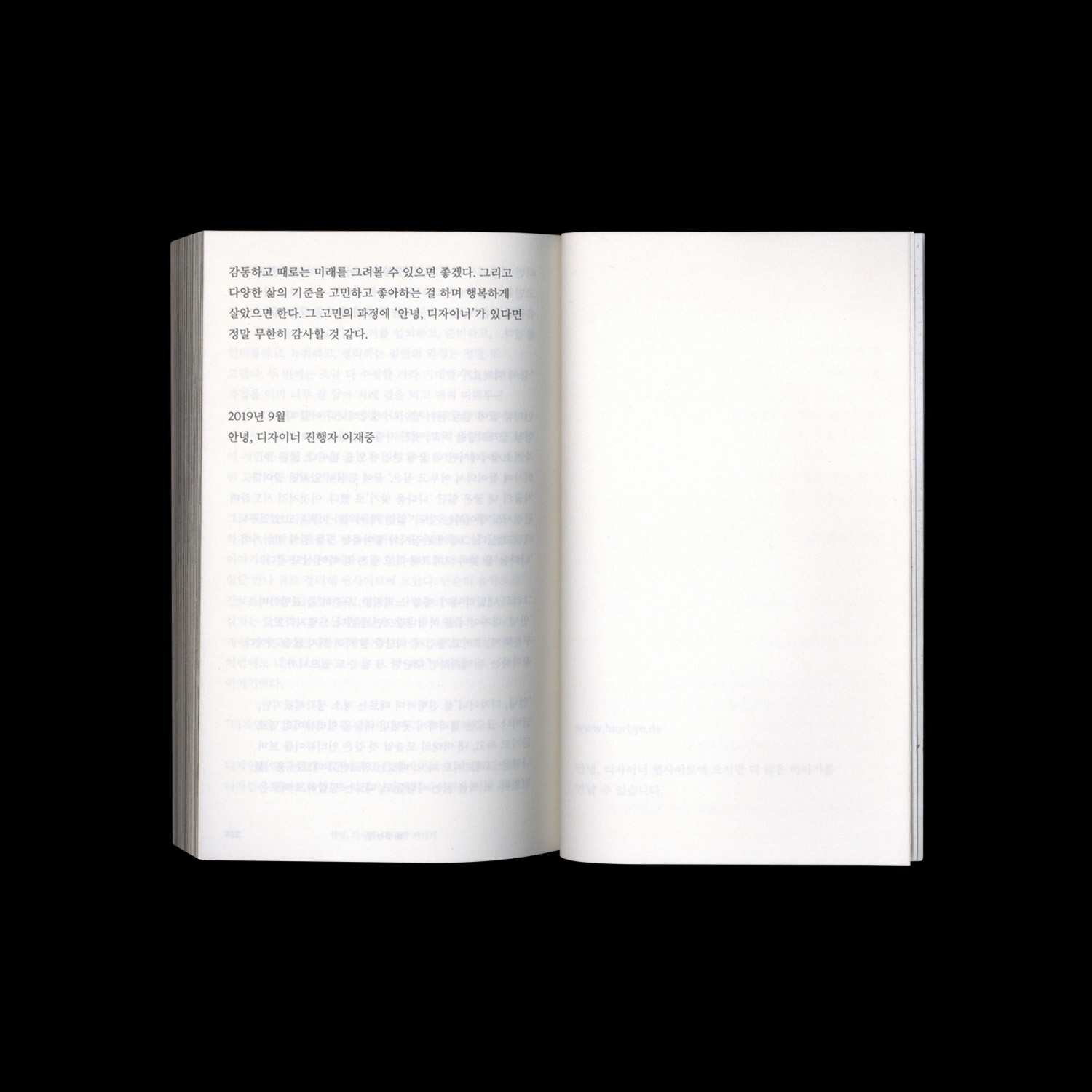
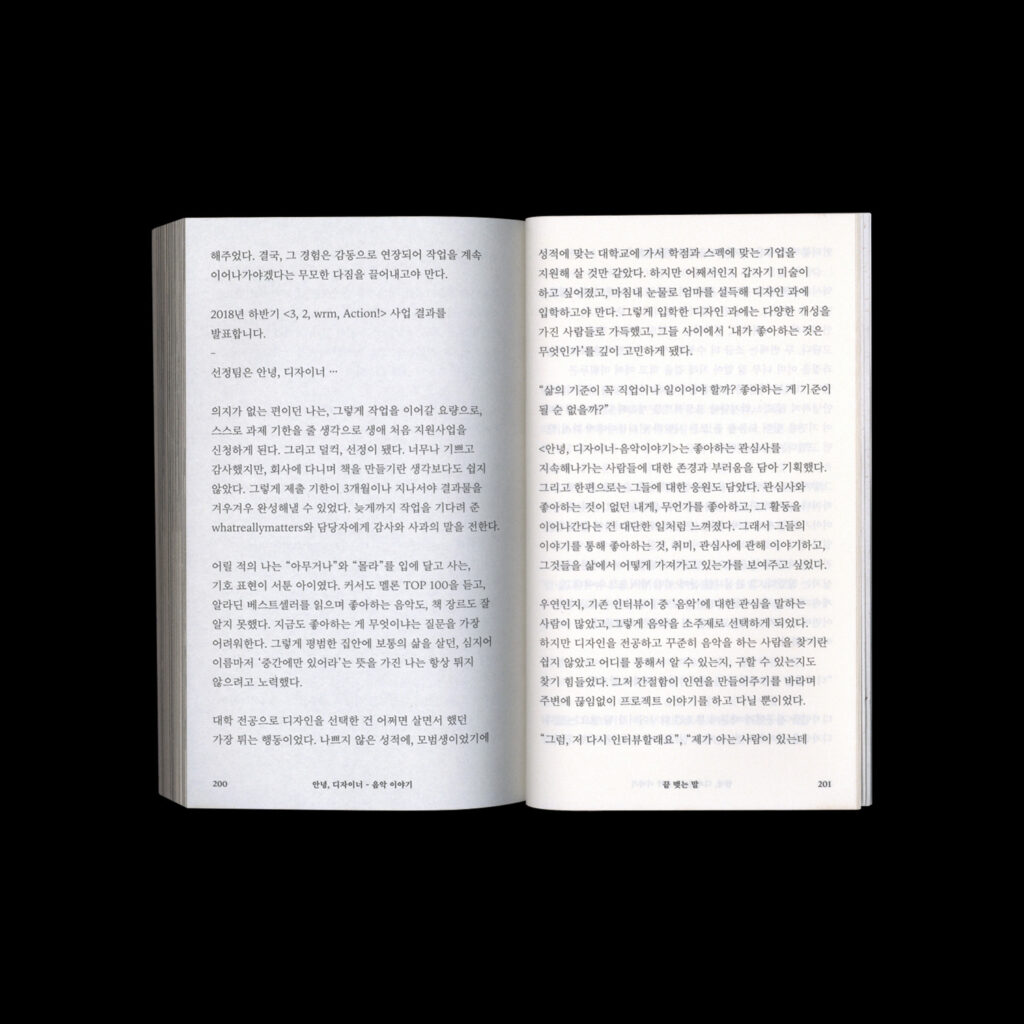
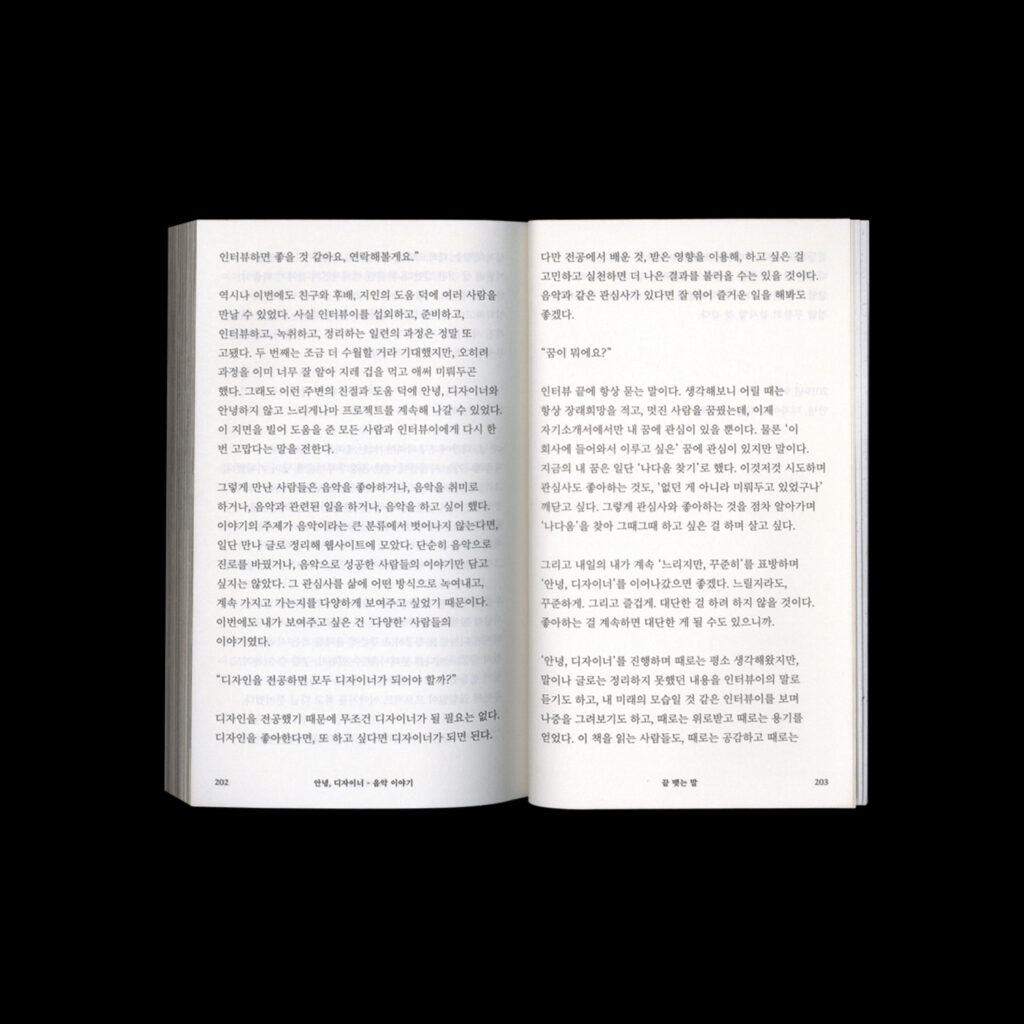
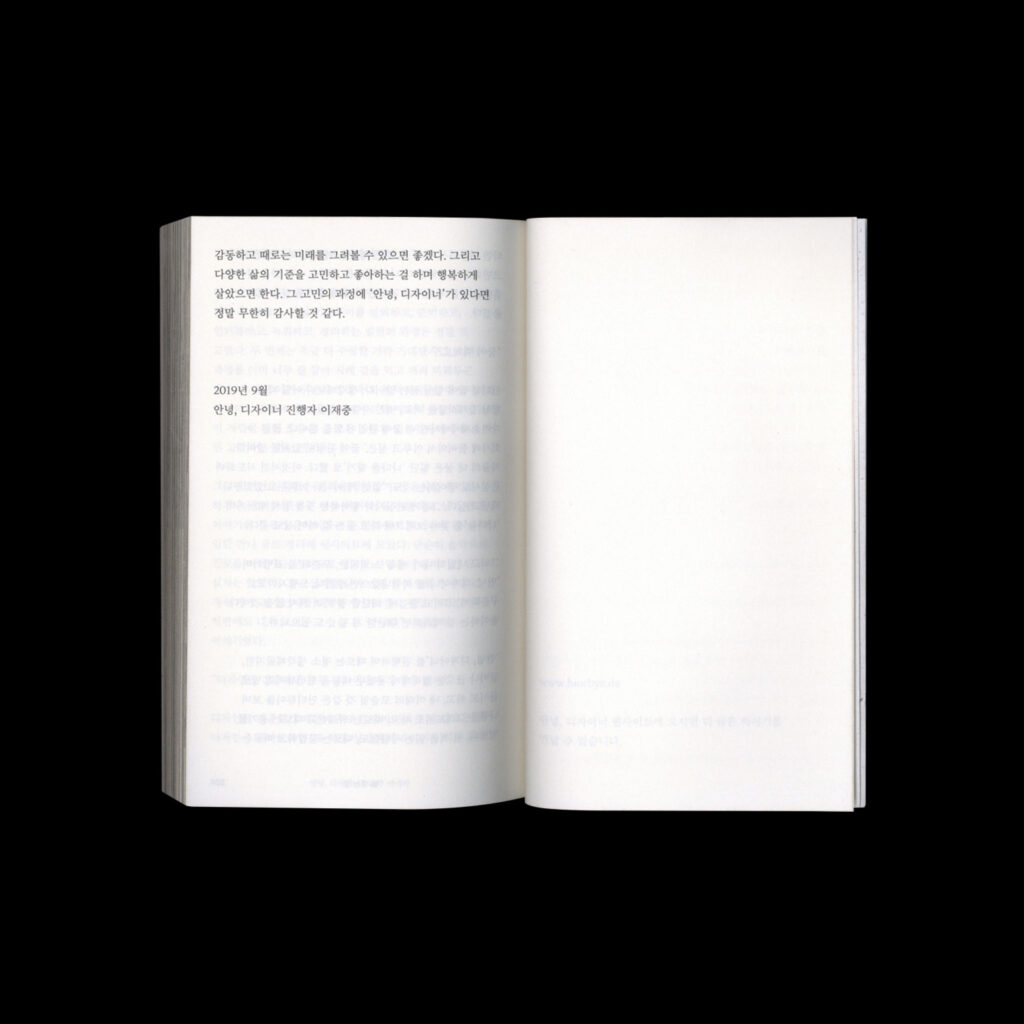
디자인을 전공했기 때문에 무조건 디자이너가 되어야 하는 것은 아니다. 디자인을 좋아한다면, 또 하고 싶다면 디자이너가 되면 된다. 디자인을 배운 건 어떤 일을 하던 머리와 가슴에 남아 좋은 방향으로 이끌어 줄 거라 믿으면서 말이다. 그 당연한 생각을 하는 데에 어쩌면 조금 오래 걸린 것 같다. ②❷이재중, 『안녕, 디자이너—회사 이야기』, 2024, 202~203.
저자가 처음 이 프로젝트를 시작했던 2018년 무렵과 현재의 대학 분위기는 많이 달라졌지만, 여전히 비슷한 고민을 하고 있는 젊은 디자인 전공자들에게 이 책은 큰 도움이 될 것이라 생각한다. 어떤 인사이트를 반드시 얻고야 말겠다는 의지를 갖고 읽기보다는, ‘이런 삶도 나에게 잘 맞겠다’라는 가벼운 마음으로 책 한장 한장을 넘기다 보면 어느 순간 한 인물의 말 한마디가 문득 마음에 남을 것이다.
Translated automatically into English via AI agent.
Hi or Bye, Designer is a three-volume collection of interviews with people who studied design. Subtitled Stories in Workplace(2018), Stories in Music(2019), and Stories in Jeju(2024), the volumes gather different voices around three subjects: work, music, and life in Jeju.
Series of Hi or Bye, Designer
The author, Jaejoong Yi, studied design at university but had no intention of working as a designer after graduation. Seeing the work his classmates made, he thought there were already so many talented designers in the world and decided to take another path. He often said, “I’m not going to do design.” Yet he knew little about the lives of people who had faced the same question, or of older graduates who had chosen other paths. The idea of seeking them out and hearing their stories firsthand became the starting point for Hi or Bye, Designer.
Generally, there’s nothing unusual about working in a field other than the one you studied. But people who studied design or art seem to feel a particular pressure to put their degree to use. Perhaps that’s because many art students settle on a direction earlier than students in other fields, while preparing for university entrance. Having made that choice so young, they may be afraid of leaving behind what they learned. (…) [But] we lived for much longer without knowing design, and there are still plenty of opportunities to try other things.①❶“Meeting Alumnus Jaejoong Yi (Visual Communication Design ’11),” HIU Press, September 3, 2024, https://hiupress.hongik.ac.kr/news/articleView.html?idxno=11089
The author’s introduction makes the book’s message clear: studying design does not rule out another path. At first, then, annyeong (안녕) in the title—which can mean both “hi” and “bye” in Korean—reads as a goodbye to design as a profession.
But is it really a goodbye? The design graduates (and, in some cases, current students) in these interviews have chosen work outside professional design. Their lives, however, have hardly left design behind. What they learned has found its way into how they live. Stories in Workplace follows business owners, planners, developers, marketers, and marketers who put their design skills to use in other fields—such as the ability to communicate through visual language. Stories in Music turns to people who share a background in design but continue to pursue something they love (in this case, music) either professionally or as a hobby. By the time we reach Stories in Jeju, the book’s focus widens from work and hobbies to where and how people live. Its interviewees speak about putting their preferred ways of life into practice in Jeju. Across the trilogy, these accounts take in work, personal interests, and the places people call home.
The interviewees share more than a degree in design. They draw on the habits they developed through studying design in everyday life: the way they observe things, organize information visually, and communicate it clearly. They may have said “bye” to design as a profession. The ways of seeing and thinking they learned, however, keep turning up when they need them—as if to say “hi” again.
From the “Afterword” in Hi or Bye Vol. 2–Stories in Music
The book’s point, then, extends beyond “you don’t have to become a designer just because you studied design.” It asks how a design education can serve people in other fields—and as they build lives of their own. Working outside one’s major does not make the years spent studying it meaningless. The questions people ask themselves, and the answers they find, leave their mark on what follows.
You don’t have to become a designer just because you studied design. If you like design and want to do it, then become a designer. Whatever you choose, I believe what you learned will stay with you—in your head and in your heart—and help guide you. Perhaps it took me a little too long to arrive at something so obvious.②❷ Jaejoong Yi, Hi or Bye, Designer—Stories in Workplace, 2024, 202–203.
University life has changed considerably since Yi began the project around 2018. Still, the book may speak to young design students facing similar questions. There is no need to read it determined to come away with a lesson. Turn its pages thinking, perhaps, “A life like this might suit me, too.” Sooner or later, something one of its subjects says may stay with you.
Writer
고현경Hyun Go
시각디자인을 전공하고 예술학 석사 과정에서 미술출판을 연구하고 있다. 디지털 시대의 출판을 다룬 『디지털 네트워크로 출판하기』(AABB, 2025), 문화사 속 숨겨진 출판의 역사를 발굴한 『Do or DIY』(미디어버스, 2026)의 저자이자 디자이너다.Hyun Go holds a BFA in Visual Communication Design and is currently pursuing an MA in Art Studies with a focus on art publishing in Korea. She is the author and designer of Publishing Through Digital Networks (AABB, 2025), a self-initiated project on publishing in the digital age, and the bilingual Korean-English edition of Do or DIY (Mediabus, 2026).